
“No Argument”. Residents enforcing tourist decorum
As someone who spends a fair amount of time thinking about the impacts of tourism on local people, it wasn’t long into my visit to Fontainhas, Goa before I saw signs of trouble. While ‘No Parking’ signs are common the world over, to see a sign that said ‘No Photography / Due to Insensitive Uncouth Loud Instagramers / Keep Silent / No Argument’ gave me pause.
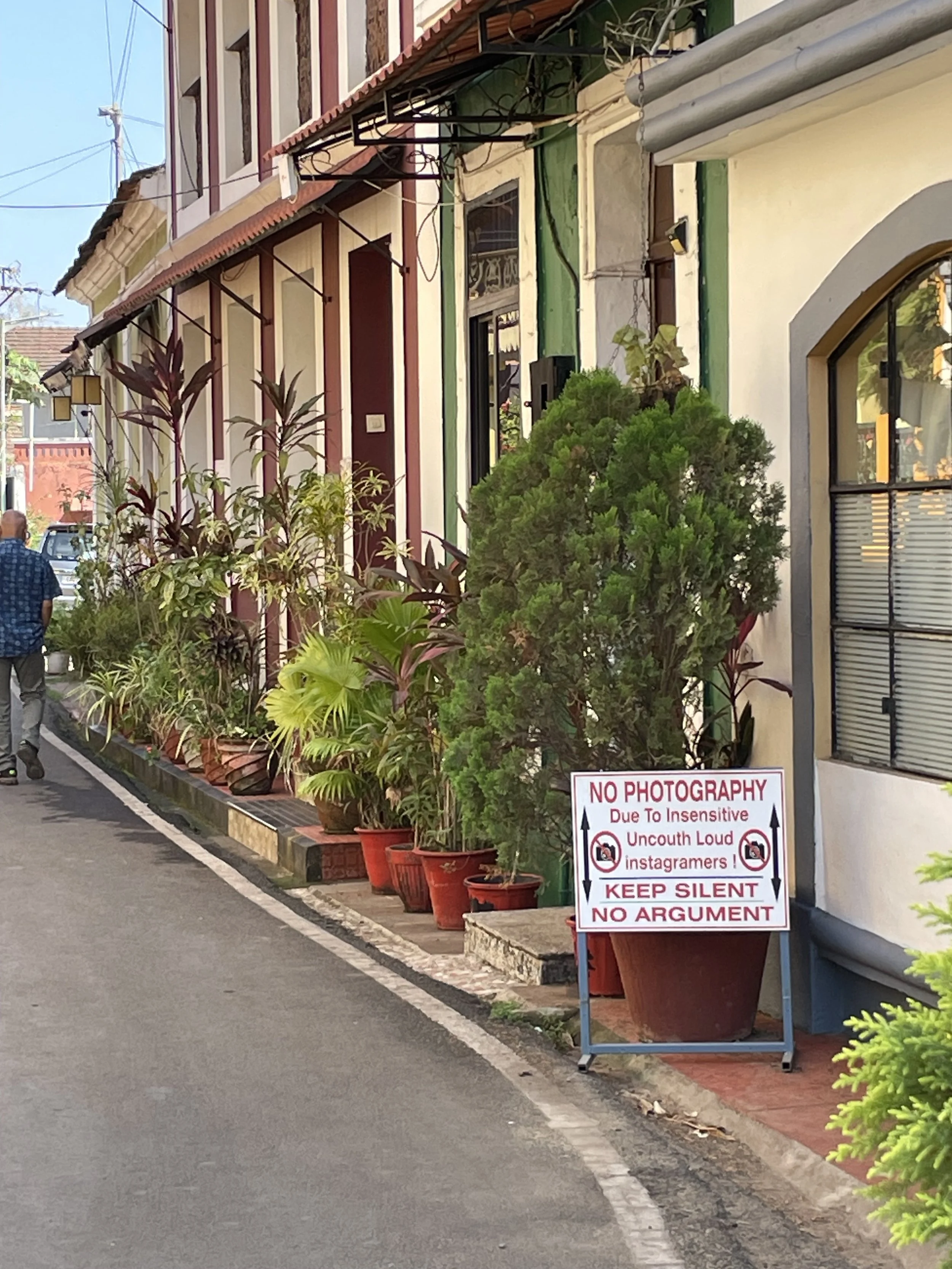
The sign is illuminating. It's not official, it's not bureaucratic, it's not politely worded. It's frustrated. It tells you everything about where Fontainhas currently sits as a place.
Fontainhas is an old Latin Quarter of Panjim, capital of Goa. The architecture is beautiful: Portuguese colonial houses from the 18th and 19th centuries, in yellows and greens and pinks, with ornate ironwork balconies, terracotta roofs, and flowering bougainvillea cascading over narrow lanes. It was designated a conservation area by the government, and that designation, combined with the rise of Instagram and a boom in domestic tourism following the pandemic, has created a perfect storm of irritation for local residents.
The boom in domestic tourism matters here. International visitor numbers have fallen in recent years, but one of the biggest drivers of the current overtourism situation in Fontainhas is social media and how popular they have become as the "Latin Quarter" of Goa. The neighbourhood has been discovered not by overseas backpackers but by the balooning, influencer-driven domestic travel market.
The residents are finding themselves as the backdrop to the lives of often rich outsiders. Residents are describing incidents like photographers doing pre-wedding shoots at 6am under their windows and amateur fashionistas blocking traffic as they are filmed walking the street.
Parking and traffic have also increased, as tourist and renal cars choke the narrow lanes and park in ways that block in local people.
In response, 80 members of the Community Association of Residents and Establishments (CARE) wrote formally to the Panjim City Corporation Mayor, stating that "the growing influx of tourists in the locality has transferred our charming and peaceful neighbourhood into a noisy and intrusive experience for the residents, destroying the local ethos and our cultural heritage."
What struck me most walking around wasn't the volume of tourists, but the mismatch of expectations. Most visitors are not behaving with deliberate disrespect. They've come because an algorithm told them this was a beautiful place worth visiting, which is absolutely is!
Unfortunately, the view-through-a-phone, posting for the ‘gram way that a lot of visitors are experiencing the area is fundamentally incompatible with the fact that people actually live here. Travellers prioritise getting the perfect photo over genuinely experiencing a place or culture, and in a place as compact and intimate as Fontainhas, that friction becomes visible and painful very quickly.
Some things have been tried. The District Magistrate has designated parts of the area as non-motorised vehicle zones, which I saw signposted in several locations, and largely being ignored. Goa Tourism has published a seven-commandment code of conduct for visitors to the Latin Quarter. Individual residents and businesses have installed their own signage, ranging from politely worded to distinctly hostile.
But the consensus on the ground is that signage without enforcement is essentially decorative. Locals voice the frustration that tourists often overlook guidelines entirely, and ask: ‘Why would people follow the rules if there are no consequences for breaking them?’
Fontainhas is not unique as being a picturesque street, attracting influencers, we see this globally. We can’t also ascribe this tourist behaviour with a ‘lack of Indian civic etiquette’ argument, which is all too popular at the moment. How can we balance local needs and a genuine desire to visit the area (for aesthetic or historic reasons)?
So what might actually work in Fontainhas?
Physical management of access points would help. There should be a way to limit the through-traffic of motorised vehicles, especially cars and tourist buses. two-wheelers will be harder to deal with, but from my observations, these seemed to be local traffic and less involved in the tourism problem.
A one-way system, enforced by physical barriers might re-route car traffic away from the most crowded streets.
Managed parking well outside the neighbourhood is imperative. Keeping the cars from outside away from the walkable streets would make the whole area much more liveable. That said, Goa is a very car-dependent state, so locals would need parking near to their homes. Some form or (enforced) permitting system would be needed.
Genuine enforcement of the code of conduct with meaningful penalties, rather than advisory signage is needed at peak times. This is present, with a mix of municipal wardens and private security. At the moment, this unfortunately feels more like traffic police. In the case of the private security, a 2-second stop to look at an interesting architectural feature results in a blown-whistle and a shout from a guard. This is both less than hospitable, plus adds the cry of whistles to the general noise of the street.
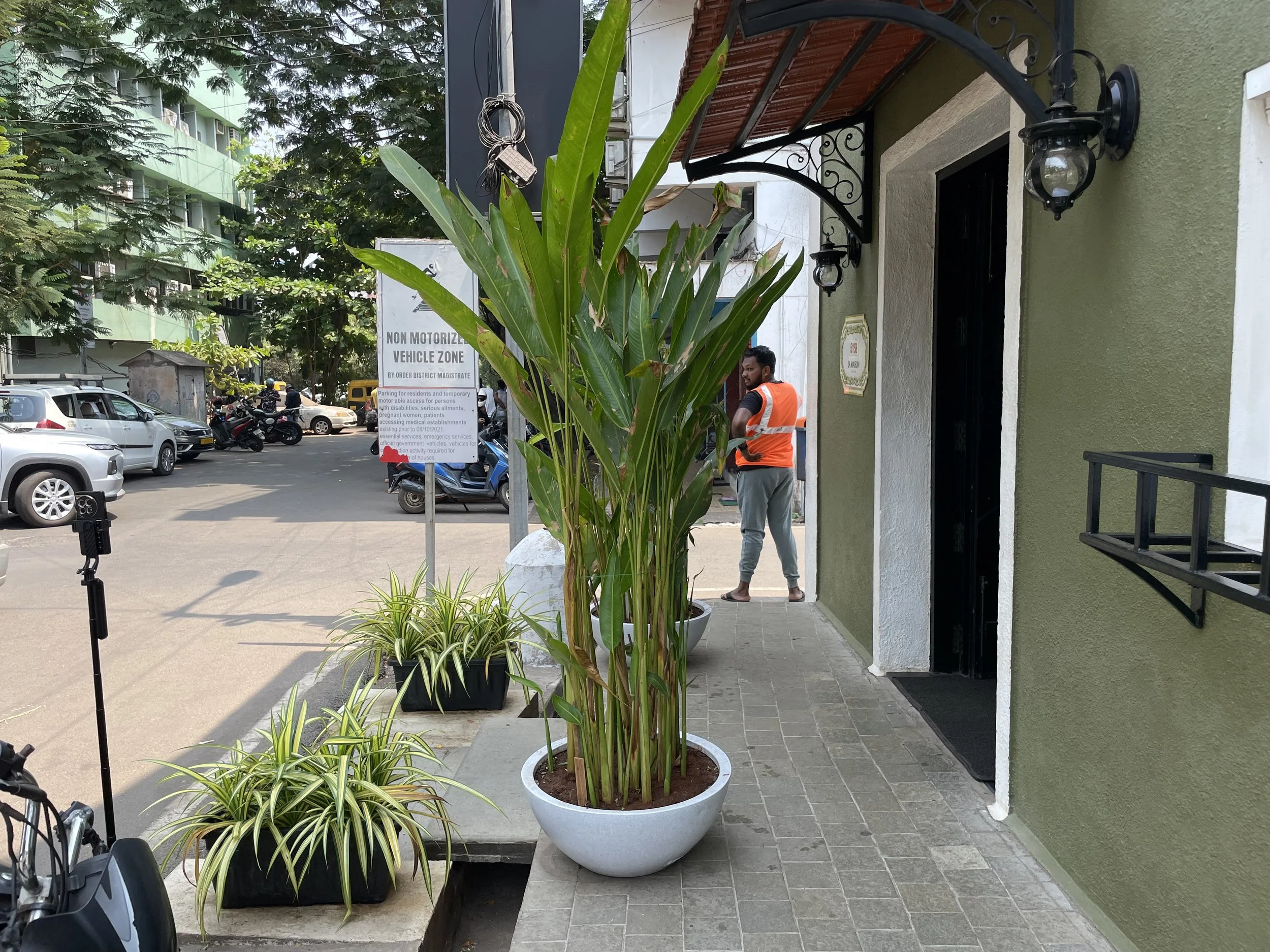
A warden enforces traffic rules
The harder problem is the one that sits underneath all of this: the framing of Fontainhas as a photography location rather than a living community. That's a social media problem, not a planning problem, and it's much harder to legislate. What you can do is slow the experience down, create friction that encourages more considered engagement, and make it structurally less easy to treat residents as background characters in someone else's content.
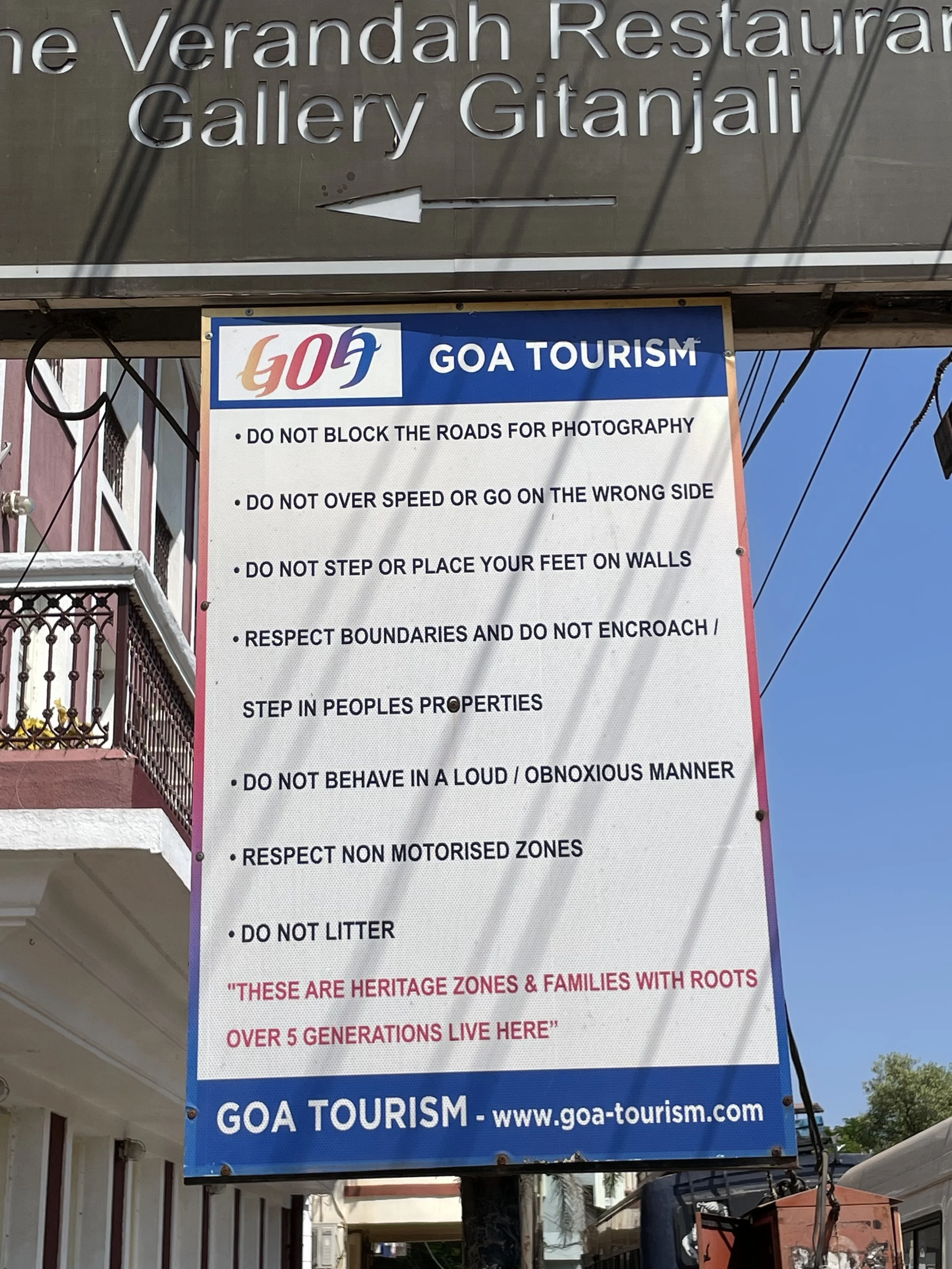
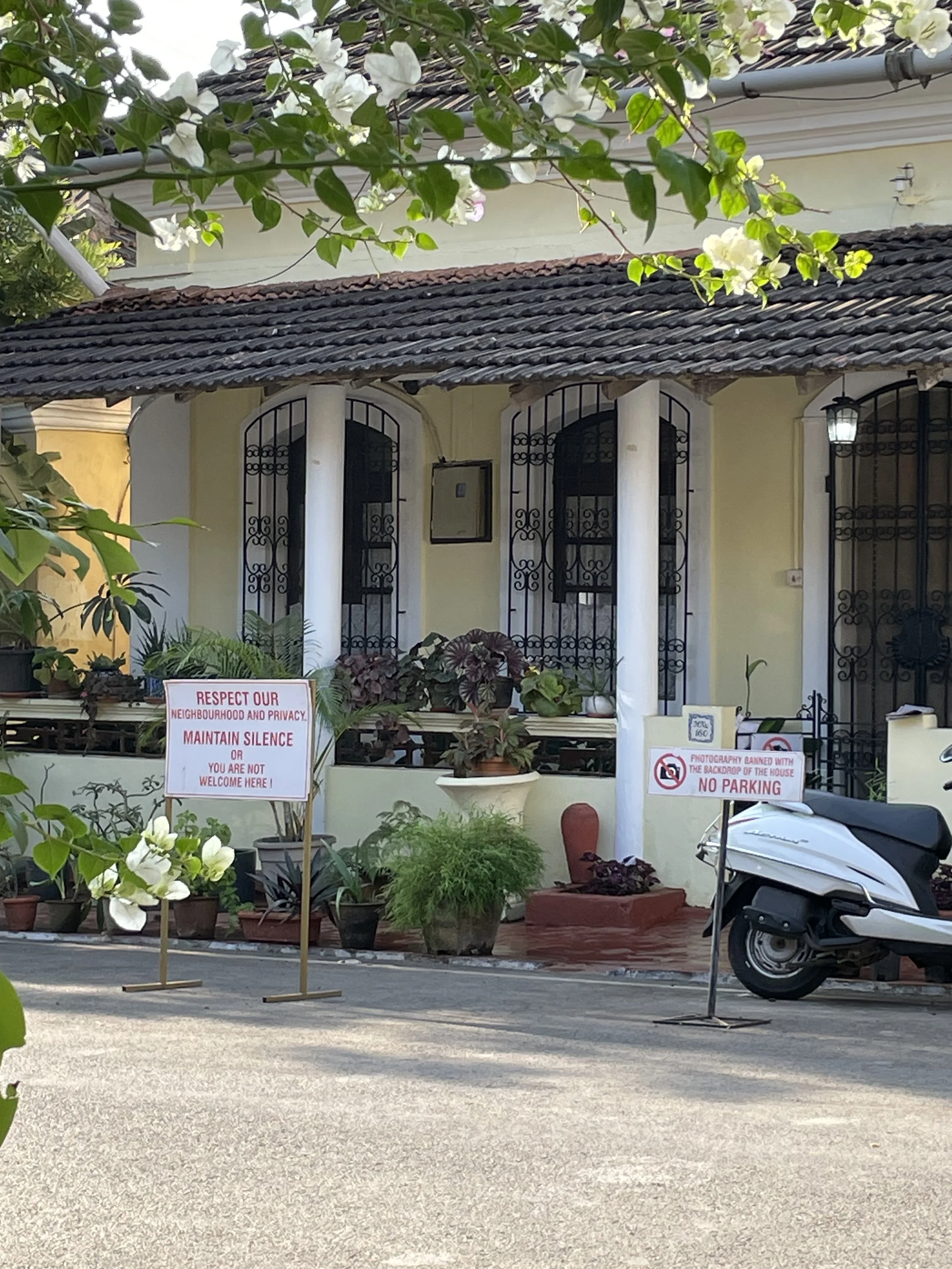
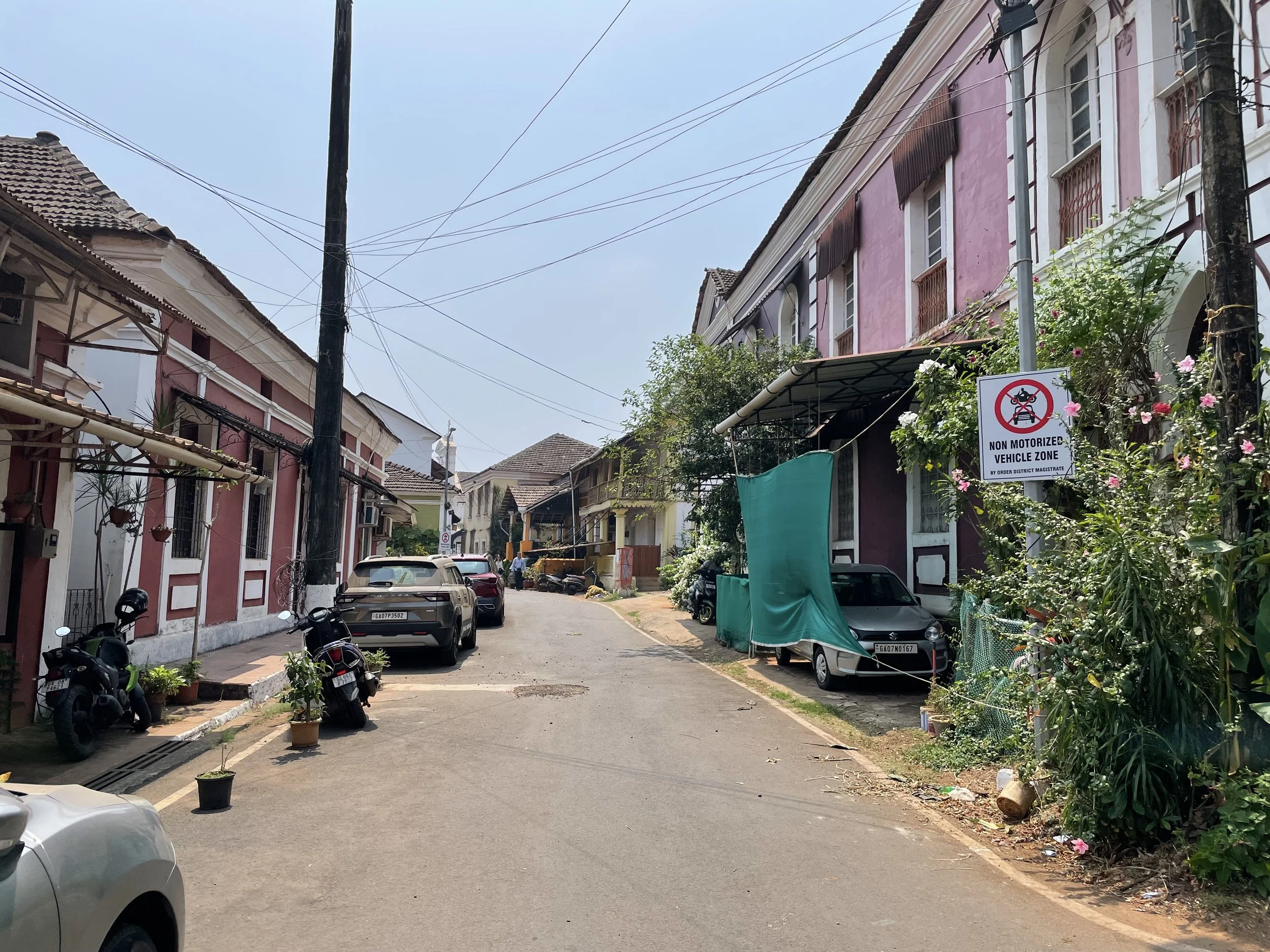
The signs in Fontainhas are a form of placemaking. Residents are trying to define the terms of engagement with their own neighbourhood because nobody else has done it adequately on their behalf. The question is whether the city is watching closely enough to take over that task before the neighbourhood's character starts to be eroded by the influx of tourists.
My suggested intervention
The square and road up to St. Sebastian's church is where I would focus efforts. I understood from locals that during religious festivals, the street is closed and festivities occur on the street. My suggestion would be to close this street to cars permanently and provide (enforced) residential parking spaces at the bottom of the street.
By making the street the central pedestrian spot in the area, the space can be appropriately programmed and tourists can be routed in more managed ways to and from the area.
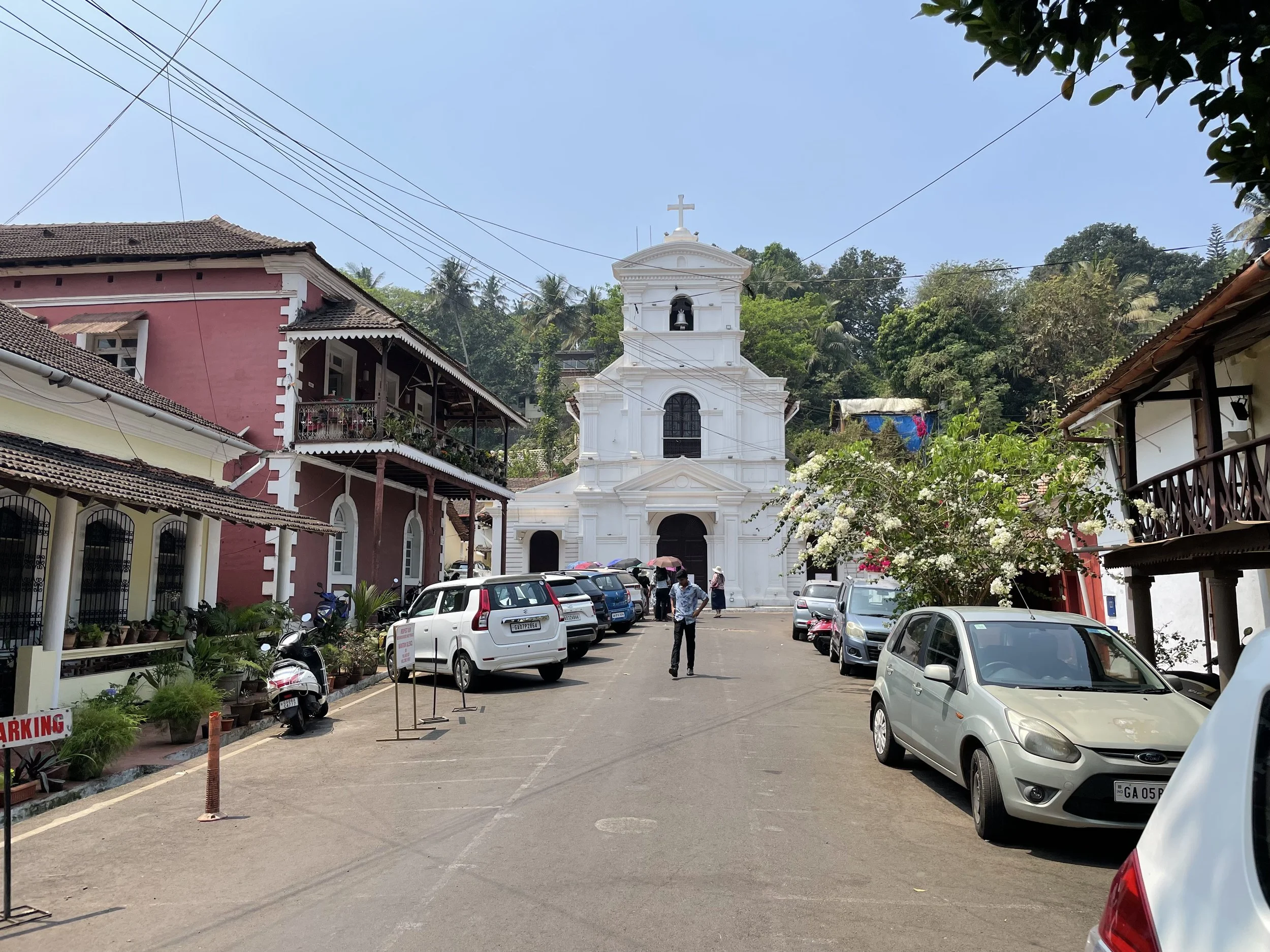
St. Sebastian’s church
