
Future of Hotels book chapter
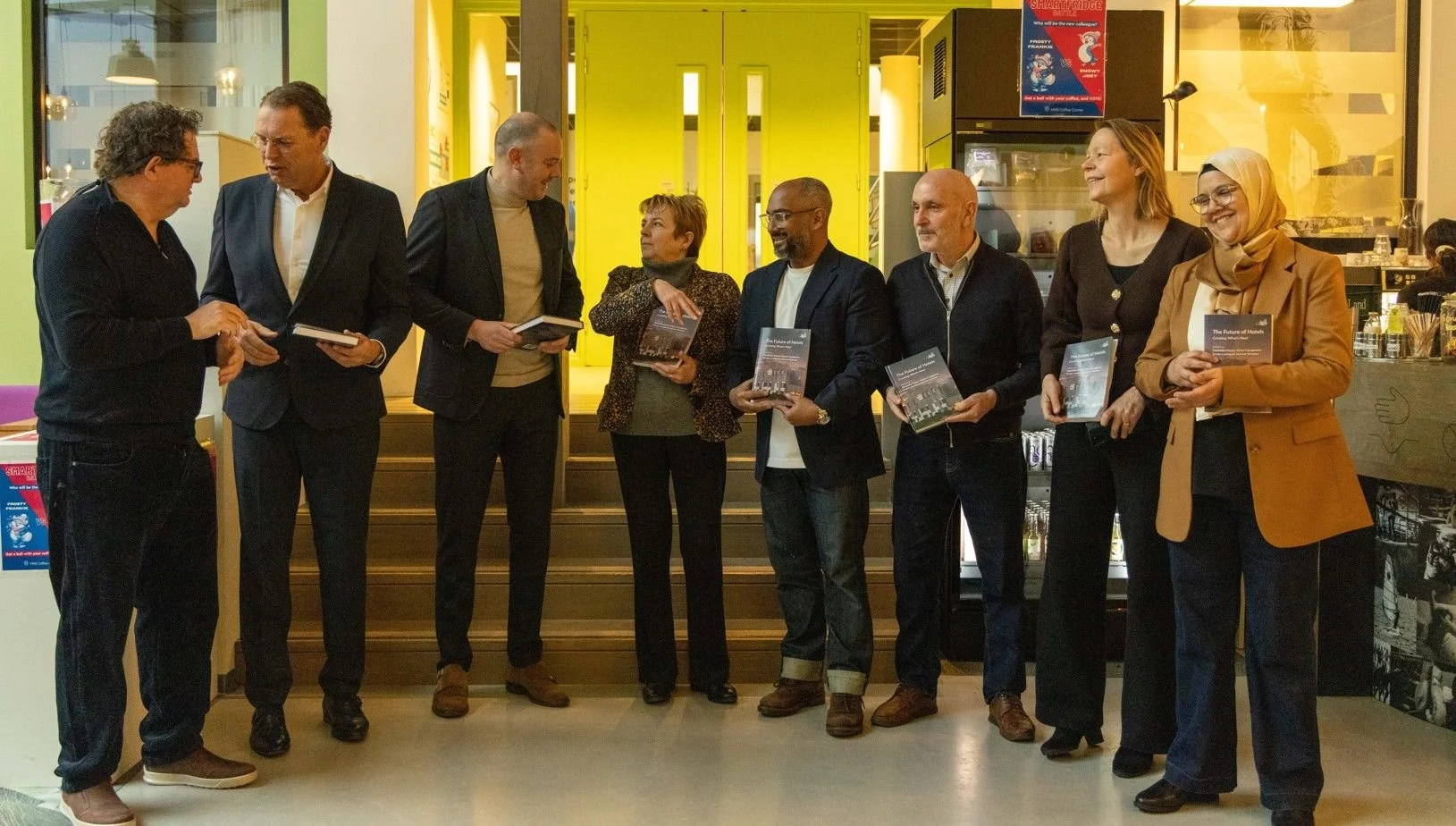
Former colleagues of NHL Stenden Hotel Management School at the launch of the book. Photo courtesy of NHL Stenden
A book I contributed a chapter to has just launched: The Future of Hotels – Creating What's Next, edited by Dr. Hanneke Assen, Dr. Elena Cavagnaro, Dr. Erwin Losekoot, and Dr. Ian Yeoman
The book looks ahead to 2050 and beyond, exploring how hotels might evolve across four interconnected themes: hospitality, education & workforce, sustainability, and innovation & disruption. It brings together researchers and practitioners from across the globe, combining forward-thinking research with real-world industry insight to imagine hotels that are more adaptive, resilient, and genuinely guest-focused.
Abstract of our chapter
From food waste to sustainable hospitality. A forward-looking Design Futures approach
Marco Bevolo & Andrew Shaw
This chapter introduces a strategic tool for a low-waste future in hotel food supply chains by leveraging digital technology and generative AI for sustainable food waste management.
Targeting the financial, environmental, and operational challenges associated with hotel food waste, the authors propose a flexible, process-driven tool informed by situational analysis and trend scanning. Recognizing the need for a systematic shift beyond individual kitchen efforts, this tool synthesizes global insights and international standards to streamline waste prevention and disposal strategies.
Emphasis is placed on generative AI, specifically in generating scenarios that project medium- and long-term impacts, illustrating potential industry shifts towards AI-driven waste management systems, smart tracking, and IoT-enabled platforms.
The tool development follows three structured steps; analysing, strategising, and generating, each informed by socio-cultural, regulatory, and technological trends. Case-specific trends, such as the rise of zero-waste policies and digital platforms for waste reduction, are highlighted as high-impact drivers for 2025-2030.
Practical strategies include real-time waste analytics, advanced stock management, and enhanced training to improve food handling, benefiting both financial and environmental outcomes. The chapter concludes with speculative projections for 2050, envisioning evolving legal and market pressures and the balance between digital innovation and ecological impacts.
The authors advocate for Design Futures as a methodology to ensure the tool’s adaptability and responsiveness to both immediate and disruptive innovations in sustainable waste management.
I'm proud to have contributed a chapter to this collection, and I want to sincerely thank the four editors for the opportunity to be part of such an ambitious and inspiring project. My contribution grew out of work that began during my earlier studies in Environmental Management.
Working together with my colleague Marco Bevolo, and AI-powered foresight guru, Dennis D Draeger, we feel have accurately looked into the future, to highlight realistic and likely developments.
If you work in hospitality, operations, sustainability, or simply enjoy thinking about how our futures might evolve, I'd encourage you to take a look.
