
Urban Life & Placemaking: Educating future placemakers
Five years ago, we launched Urban Life & Placemaking (ULP) at Breda University of Applied Sciences. This 2-year specialisation approaches cities as complex ecosystems where leisure and events are not just nice additions to city life, but as catalysts for meaningful urban transformation.
Our Core Philosophy
At ULP, we've built our curriculum around a central conviction: cities should be both liveable and loveable. This means preparing students to leverage leisure and events as strategic tools for addressing urban challenges while enhancing quality of life. Whether through community festivals that foster social cohesion, public space interventions that reclaim underused areas, or cultural programming that celebrates diversity, our graduates learn to see leisure as integral to urban development.
Programme Structure and Approach
ULP is a two-year specialisation within the Leisure & Events Management bachelor's programme, offered as a hybrid programme in English and Dutch. We've designed it around a fundamental principle: authentic urban placemaking cannot be taught solely through theory, it requires immersion in real-world contexts.
Building Foundations Through Practice
Students engage with courses including Community Development, Concepting, Place Branding, and Urban Futures thinking. These theoretical frameworks immediately connect to practical application through partnerships with city marketing organisations, cultural institutions, festivals such as GLOW Eindhoven and Gentse Feesten, and municipal planning departments. These collaborations represent genuine professional relationships, with many extending well beyond individual course assignments.
A defining element is Urban Scope, where students undertake field trips to ten cities across the Netherlands and Flanders. Each visit explores a distinct urban theme: Eventful Rotterdam, Inclusive Amsterdam, Sustainable Tilburg, Creative Nijmegen, Futureproof Eindhoven, Safe Ghent, and Playful Breda, among others. These experiences expose students to many urban stakeholders and reinforce a core competency: learning to work with communities rather than simply for them.
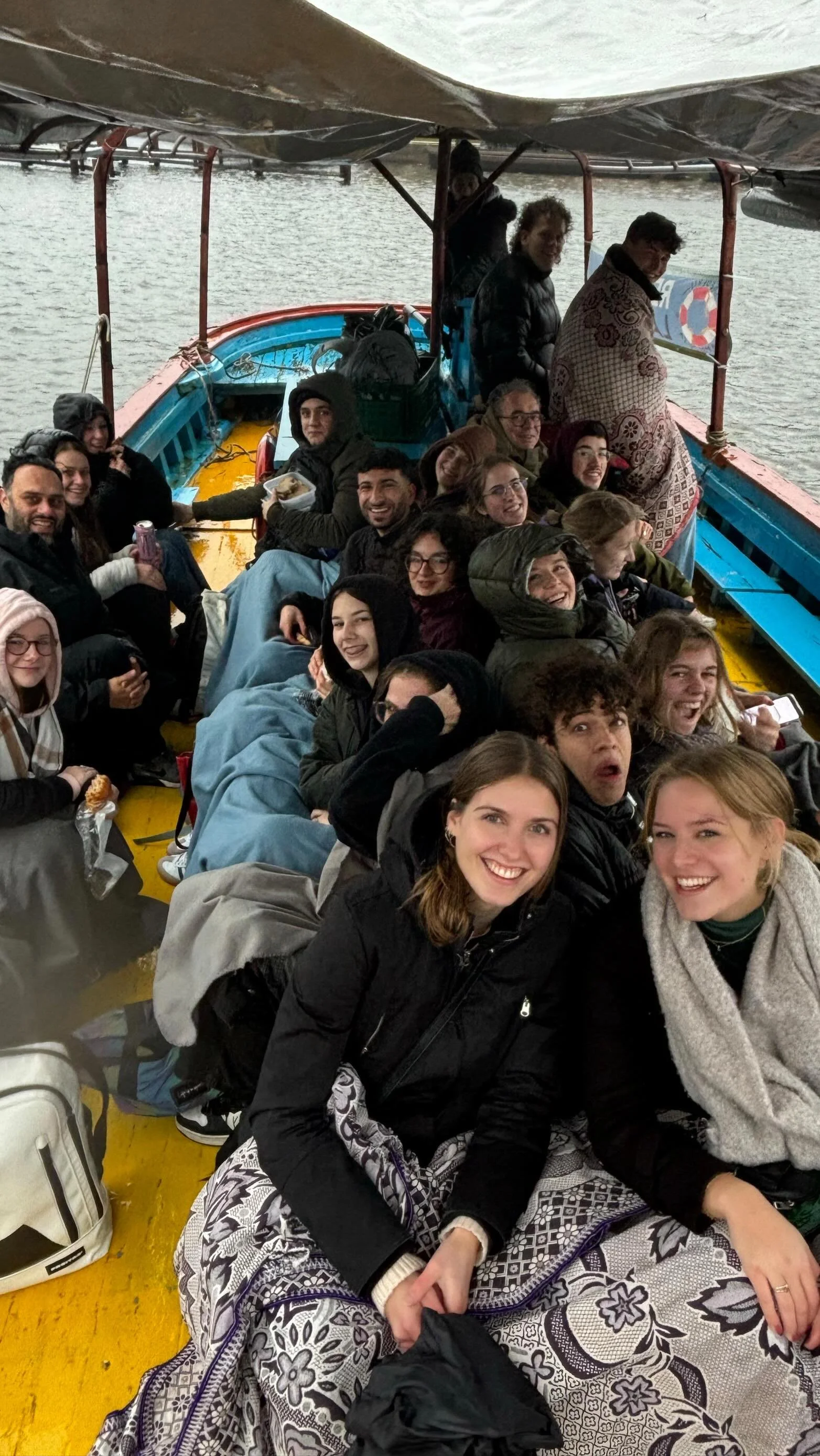
Students on a tour of Amsterdam’s canals with Lampadusa, an organisation that tells the stories of immigrants to Europe by giving city tours using actual boats used to cross the Mediterranean
The Projects for the City course empowers students to identify and develop their own urban interventions. Over the course of a year, students approach 3 projects through the lenses of Placemaking, Imagineering and Events, using project management tools to co-create activities with a range of stakeholders.
Over five years, students have completed approximately 60 projects with more than 45 partner organisations, building professional portfolios while addressing real community needs. This approach cultivates initiative, creativity, and genuine ownership of outcomes.
The European Classroom
Students spend an entire semester living, studying, and working in European cities including Bologna, Krakow, Thessaloniki, and Trondheim, amongst many others. This isn't study abroad in the traditional sense, our guiding principle is live like a local, act like a professional. Students maintain their BUas coursework online while undertaking internships and local projects, creating what we call "the European classroom."
This immersive experience includes our annual Living in the City Conference, where students present their work to diverse stakeholder audiences both on campus in Breda, and online. The semester develops not only professional competencies but also intercultural awareness, resilience, and the capacity to navigate unfamiliar contexts, essential qualities for professionals working in increasingly diverse urban environments.
Continuous Evolution and Future Directions
Maintaining a relevant programme requires ongoing reflection and adaptation. Our engagement with Placemaking Week Europe has been particularly instructive. While attending this annual gathering of European placemaking practitioners, we observed that leisure, despite its considerable potential, wasn't always centred in discussions about urban transformation. This insight prompted important questions about how we position leisure within our curriculum.
We have taken this insight and challenged our students to help develop the course and structure that gives them the skills and knowledge needed to work with placemaking partners. Together we have developed the programme with increased hands-on learning, deeper collaboration with diverse stakeholders, and engagement with multi-stakeholder environments such as living labs. Their priorities of diversity, inclusion, social cohesion, and cultural collaboration emphasise the human dimensions of urban life.
Students also express concerns about macro-level challenges: over-construction, housing crises, climate change, political instability, and social isolation. While this demonstrates awareness of contemporary urban pressures, it also highlights our responsibility to foster futures literacy to help students envision scenarios where their professional contributions can meaningfully address these challenges.
A Framework for the Future
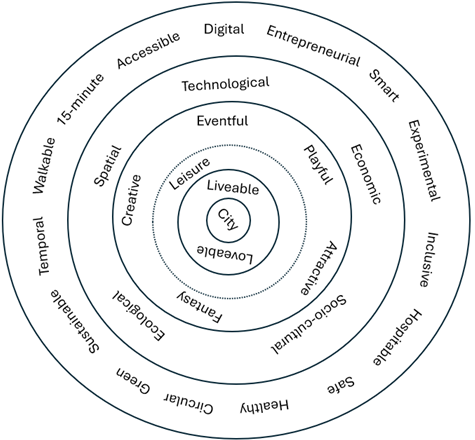
The ULP Wheel of Themes
In response to these insights, we've developed the Wheel of Themes, a curriculum design tool that maintains "liveable and loveable cities" at its conceptual centre while organising teaching around leisure-driven urban themes: The Creative City, The Eventful City, The Attractive City, The Fantasy City, and The Playful City. This structure provides students with clear thematic frameworks while maintaining curricular vibrancy and relevance.
Each theme opens up distinct questions, methodologies, and partnership opportunities, allowing students to explore urban dynamics through varying leisure lenses while connecting theory and practice across multiple scales, from neighbourhood interventions to city and region-wide strategic development.
Deepening Local Connections
We're currently strengthening our collaboration with Urban Living Lab Breda, which operates at the intersection of research, education, and practice. Through this lab, we're able to experiment, learn alongside practitioners and communities, and contribute meaningfully to local urban development.
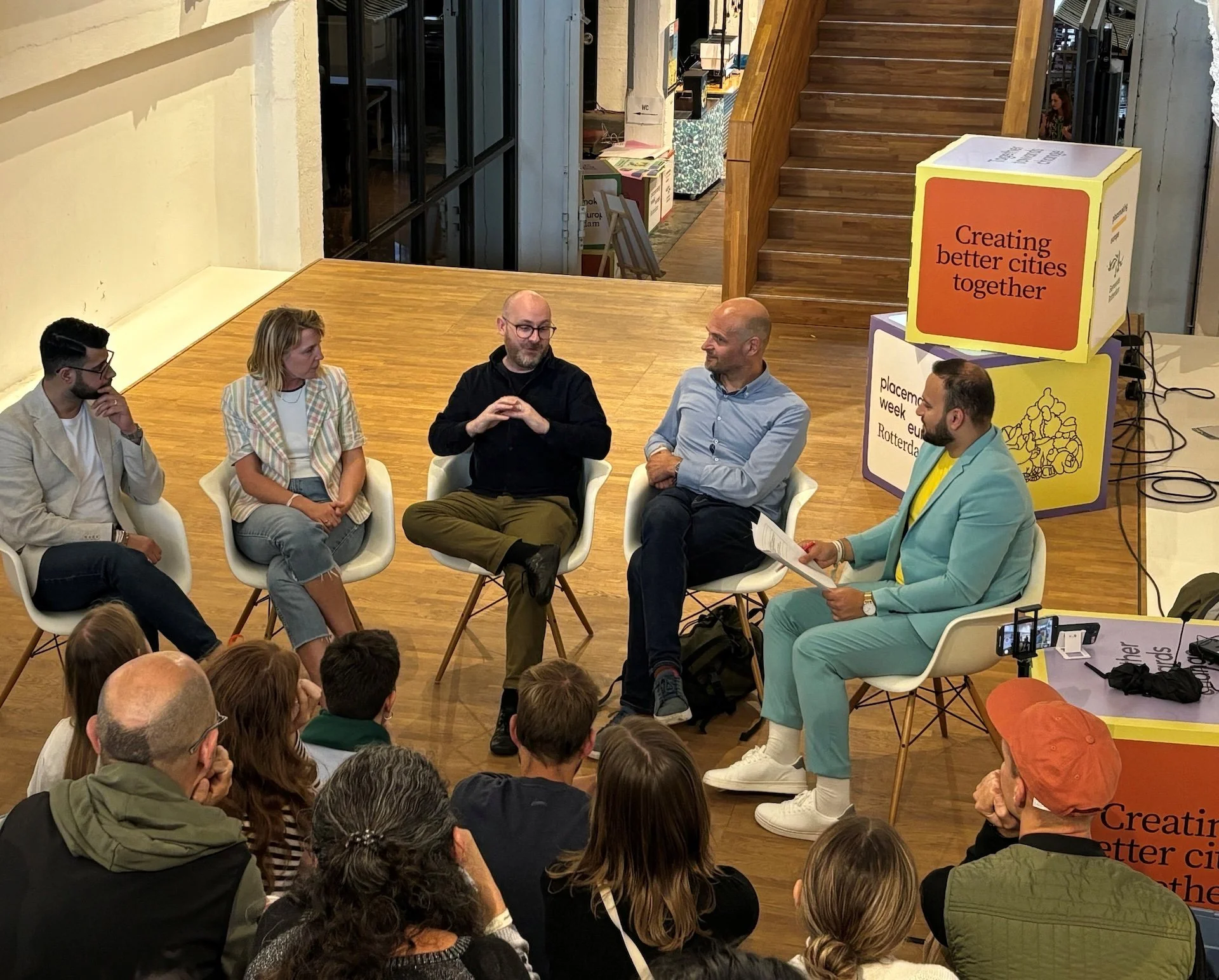
A conversation about Placemaking Education
Looking Ahead
Nearly 100 students have now completed or are enrolled in ULP, and we're increasingly clear about our role: we are the connectors. We bring together students, practitioners, communities, and organisations to co-create places that enhance urban life. This work requires curiosity, experimentation, and a commitment to collaborative processes that honour both the complexity and the joy of urban experience.
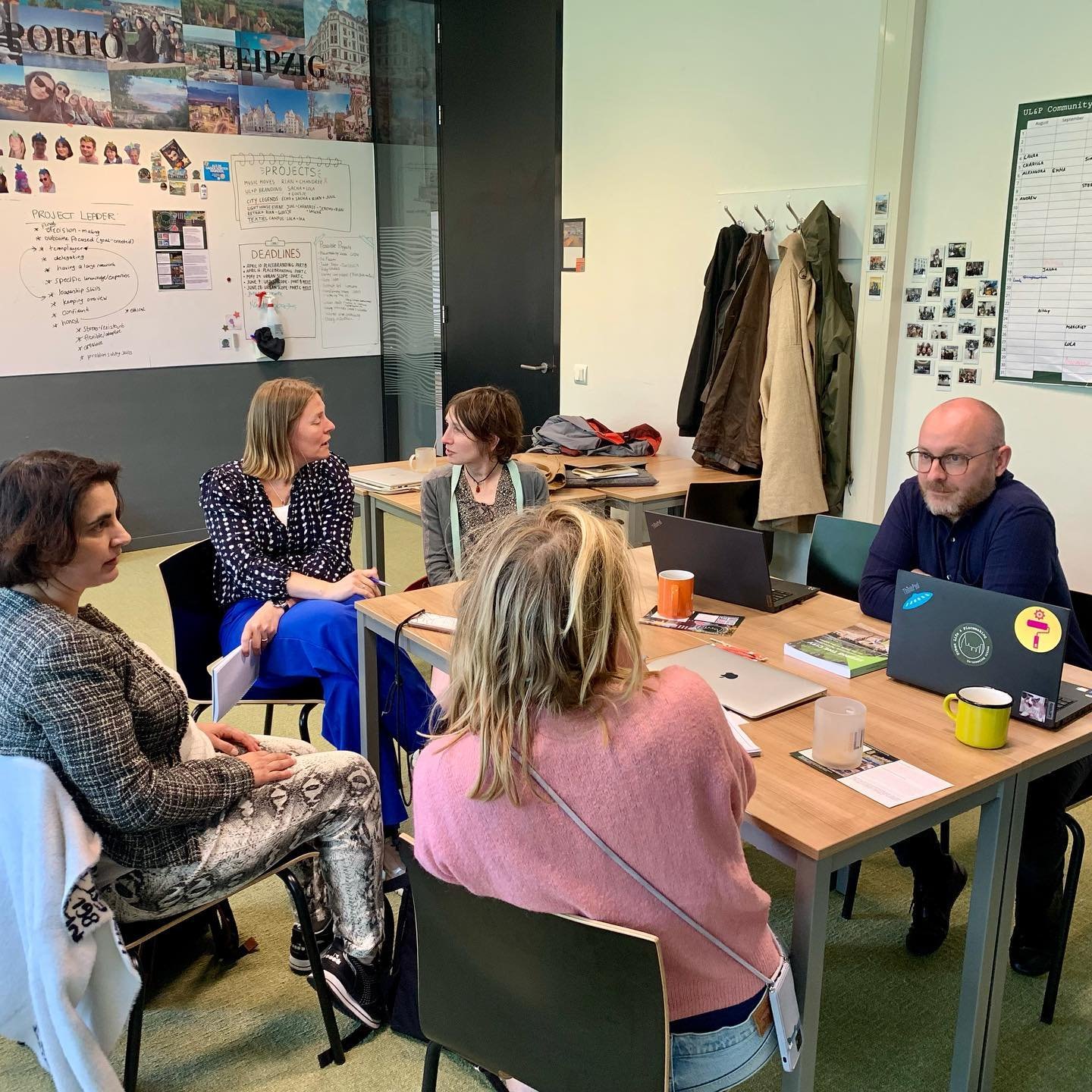
A meeting between placemaking educators from BUas and University of Amsterdam
The urban challenges ahead, such as climate adaptation, equitable development and social cohesion demand professionals who can think systemically, work across disciplines and cultures, and maintain focus on what makes cities worth inhabiting: the experiences, relationships, and moments of delight that emerge when public space serves diverse communities well.
Training this next generation of urban professionals who understand leisure not merely as entertainment but as a strategic dimension of inclusive, sustainable urban development, is work I find deeply meaningful. I'm genuinely excited to see how our graduates will continue shaping urban futures in the years ahead.
For more information about the Urban Life & Placemaking programme, visit BUas, follow us on Linkedin or Instagram, or feel free to reach out directly.
