
Harnessing Leisure Communities for Flood Disaster Risk Management
This blog is my thesis for an MA in Disaster Risk Management & Climate Governance from Universidad Católica De Murcia (via Structuralia). The following work was written in 2025
Summary
This intervention proposal imagines how leisure communities such as sports clubs, recreation centres, and hobby-based associations, can be formally integrated into the flood disaster risk management (DRM) framework of York, United Kingdom.
The city’s historical and geographical vulnerability to flooding from the Rivers Ouse and Foss has been exacerbated by climate change. While York is considered well prepared for flooding, community involvement in flood planning remains limited. This research argues that existing social networks within leisure communities represent an underutilised form of social capital that can strengthen preparedness, response, and recovery capacities at the local level.
The intervention applies the concepts of Community-Based Disaster Risk Management (CBDRM) and social capital to transform the existing structures of leisure communities into a formalised community disaster response. International case studies provide insights into how leisure and social groups have acted as informal but effective first responders during flood events.
Using a Participatory Policy Design methodology, an intervention is designed for York that maps leisure community assets, facilitates co-design workshops with the municipality other authorities, and establishes methods of communication, training, and emergency coordination. A Theory of Change model is used to understand the process from inputs to outcomes.
The findings suggest that integrating leisure communities into York’s DRM framework can enhance local capacity, improve trust between authorities and residents, and embed resilience within everyday life. This intervention design offers a scalable model for other UK cities seeking to implement participatory resilience planning, as recommended in the Sendai Framework for Disaster Risk Reduction (2015–2030).
Key Words
Community-Based Disaster Risk Management (CBDRM), flood resilience, leisure communities, social capital, participatory policy design, York (UK), co-design, climate adaptation, disaster preparedness, urban governance
Definition of Leisure Communities
A physical social network, located together in one location and organised around voluntary participation in shared recreational activities. It is characterised by regular, in-person meeting and structured in varying degrees of formality, from informal groups to formally governed organisations.
Key characteristics:
Activity-based: Centred on sports, hobbies, games, or recreation (e.g., football clubs, art societies, model clubs etc)
Physical location: Members gather in person at specific venues (community centres, playing fields, clubhouses) rather than digitally
Embedded in the locality: The community often becomes a central hotspot in the local area, extending its influence beyond only its members
List of figures
Figure 1. Theoretical Framework
Figure 2. York’s location in the UK
Figure 3. Ouse Flood
Figure 4. York Flooding
Figure 5. Leisure Communities
Figure 6. Combined York Flooding
Figure 7. Chronogram
List of tables
Table 1. Overview of significant flood events over the past Ca 50 years in York.
Table 2. Overview of authorities & roles – Municipal response
Table 3. Overview of authorities & roles – Operational response
Table 4. Theory of Change model
Table 5. Timing of intervention phases
Abbreviations
CBDRM Community-Based Disaster Risk Management
DEFRA Department for Environment, Food & Rural Affairs
DRM Disaster Risk Management
EA Environment Agency
EPU Emergency Planning Unit
IPCC Intergovernmental Panel on Climate Change
LFMS Local Flood Risk Management Strategy
LLFA Lead Local Flood Authority
NHS National Health Service
NYLRF North Yorkshire Local Resilience Forum
PDCA Plan, Do, Check, Adapt
PFRA Preliminary Flood Risk Assessment
ToC Theory of Change
UK United Kingdom
UNDRR United Nations Office for Disaster Risk Reduction
VSEP Voluntary Sector Emergency Partnership
YCRP York Community Resilience Partnership
Contents
1. Delimitation of the Intervention Project
1.1 Rationale
1.2 Theoretical Framework
1.3. Intervention needs assessment
1.3.1 Background to the focus location
1.3.2 Mapping stakeholders & roles
1.3.3 Municipal & Civil roles
1.3.4 Case studies
Taff's Well Rugby club's response to Storm Dennis, Wales, UK, 2020
The community response to Storm DANA, Valencia, Spain
Youth sport clubs’ response to storms in Hoshiarpur, India
2. Objectives
2.1 General objective
2.2 Specific objectives
3. Intervention proposal
Policy intervention
Community-Based Disaster Risk Management (CBDRM) and Collective Capacity
3.1.2 Assessment of intervention needs
3.2 Description of the sessions
3.2.1 Phase 1: Contextual and Policy Analysis
3.2.2 Phase 2: Stakeholder Engagement and Co-Design Workshops
3.2.3 Phase 3: Intervention Design and Policy Prototyping
3.2.4 Phase 4: Validation and Refinement
3.3 Timing
4. Monitoring and evaluation
4.1 Outputs/Outcomes
Key Performance Indicators (KPIs)
4.2 Risks and Limitations of the Intervention
4.3 Ethical Considerations
5. Conclusions
5.1 A vision of 2035
5.2 Limitations
Recommendations and Future Directions
Bibliography
1. Delimitation of the Intervention Project
1.1 Rationale
Flooding constitutes the United Kingdom's primary natural hazard, with York ranking among the nation's most vulnerable cities due to its position at the Ouse-Foss confluence (Environment Agency, 2021). Climate projections indicate intensifying risk through increased precipitation intensity and greater storm frequency (IPCC, 2022).
Despite substantial institutional investment, including the York Flood Alleviation Scheme, and coordinated planning by City of York Council, Environment Agency, and North Yorkshire Local Resilience Forum, major events in 2000, 2015, and 2019 demonstrate ongoing community vulnerability and the limitations of infrastructure-centred, top-down risk management approaches.
The Sendai Framework for Disaster Risk Reduction 2015–2030 explicitly mandates community participation in DRM, and states that resilience emerges from social systems and networks, rather than infrastructure alone (UNDRR, 2015). Aldrich (2012) argues that social capital frequently proves the decisive factor when comparing the recovery of communities after an emergency. Integrating communities into local flood risk strategies positions them as both immediate responders and long-term recovery stakeholders.
Leisure communities possess structural characteristics aligned with disaster preparedness requirements. These organizations demonstrate volunteerism, collectivism, and community identity (Cuskelly et al., 2006), while team-based activities develop informal leadership hierarchies that can function as response units during emergencies (Suggett, 2017). Recreation facilities provide dual-use potential: serving routine community functions during normal periods while transitioning to emergency shelters or distribution hubs during flood events, then supporting psychological and social recovery during rehabilitation phases (Comfort et al., 2012).
These organisations embody all three dimensions of social capital identified by Woolcock (2001): bonding capital through close ties, bridging capital from connections across diverse community segments, and linking capital through relationships with governing institutions. This multi-dimensional capacity proves particularly valuable across flood management phases (Aldrich, 2012). Leisure communities already mobilise volunteer networks, operate physical infrastructure with shelter potential, and cultivate belonging and solidarity (Misener & Mason, 2006).
York presents an opportunity to integrate leisure communities and flood relief. Many sports clubs occupy floodplain locations, while parish councils and community flood groups already participate in governance structures, suggesting established pathways for expanded community engagement. The city's current public consultation on its next flood risk management strategy creates a policy window for formally incorporating leisure organisations into DRM frameworks, potentially expanding system capacity while addressing documented gaps in community engagement and resilience building.
1.2 Theoretical Framework
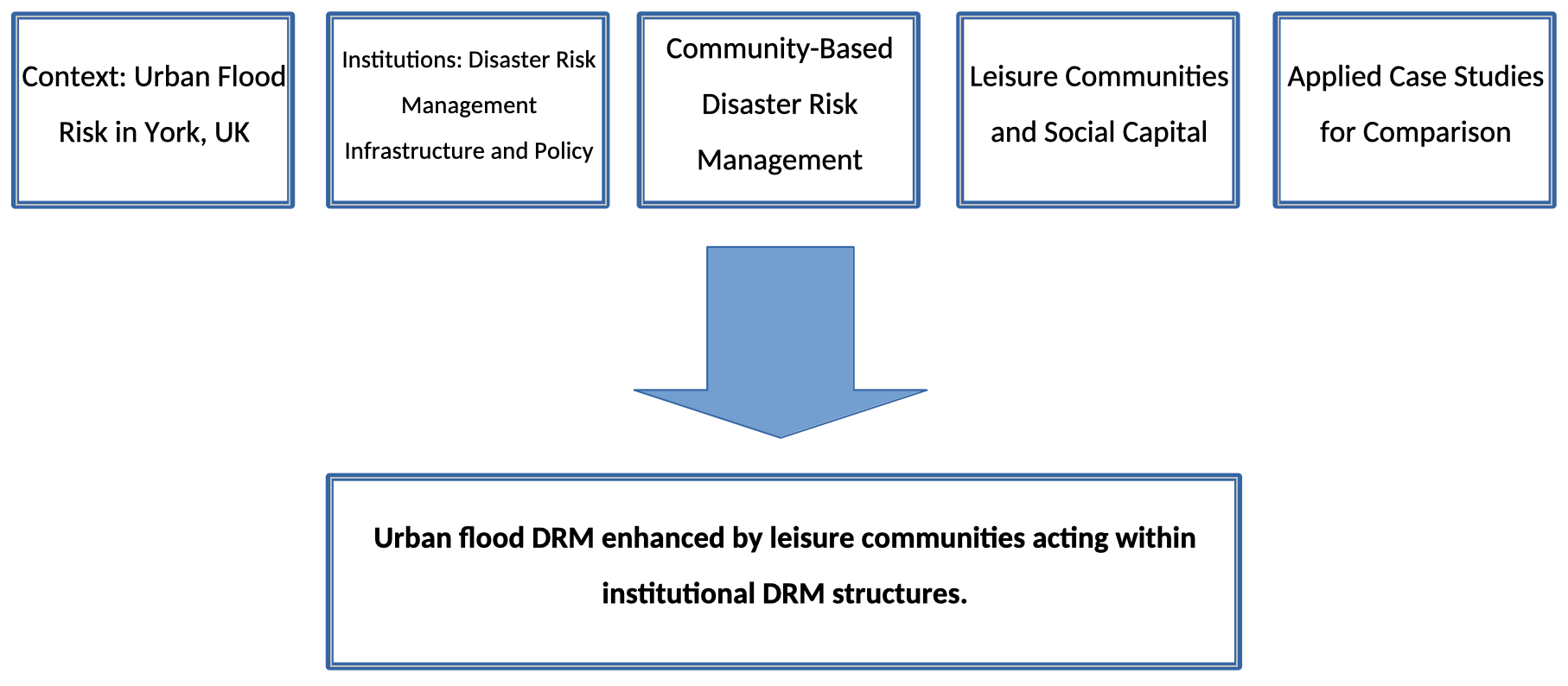
Figure 1.Theoretical Framework. Visualised themes and resultant knowledge base. Own work, 2025.
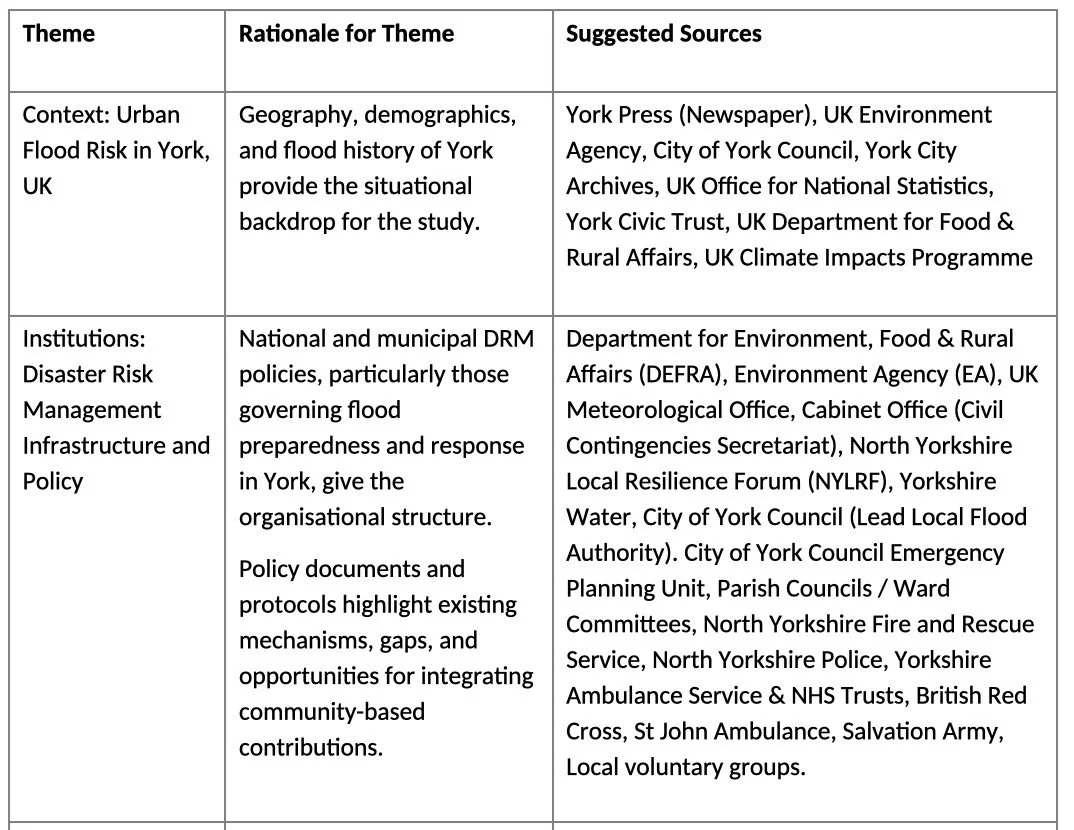
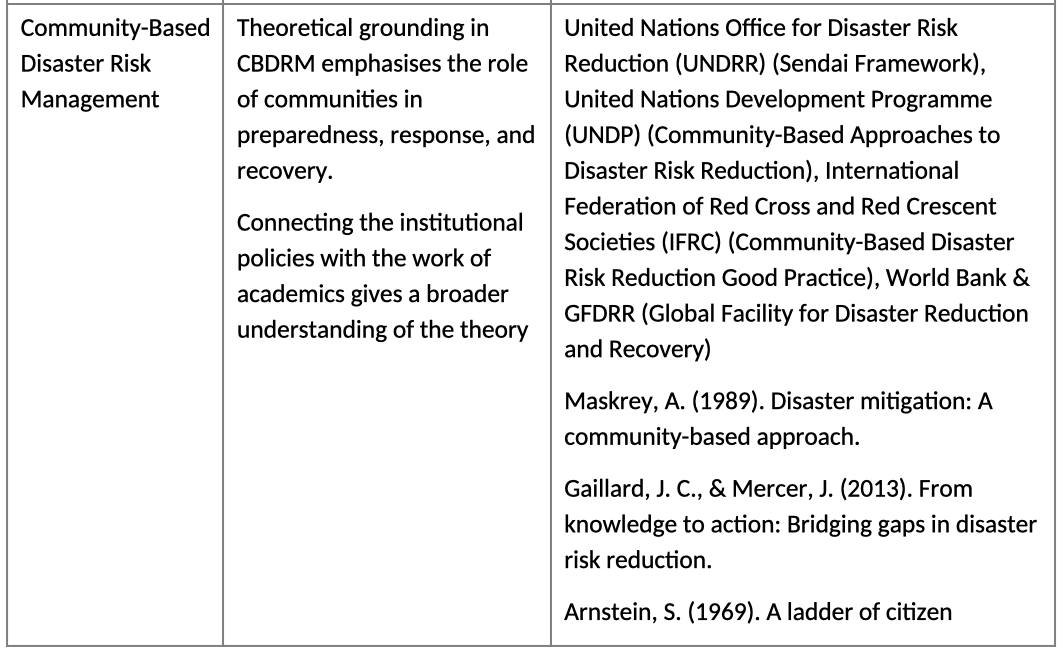
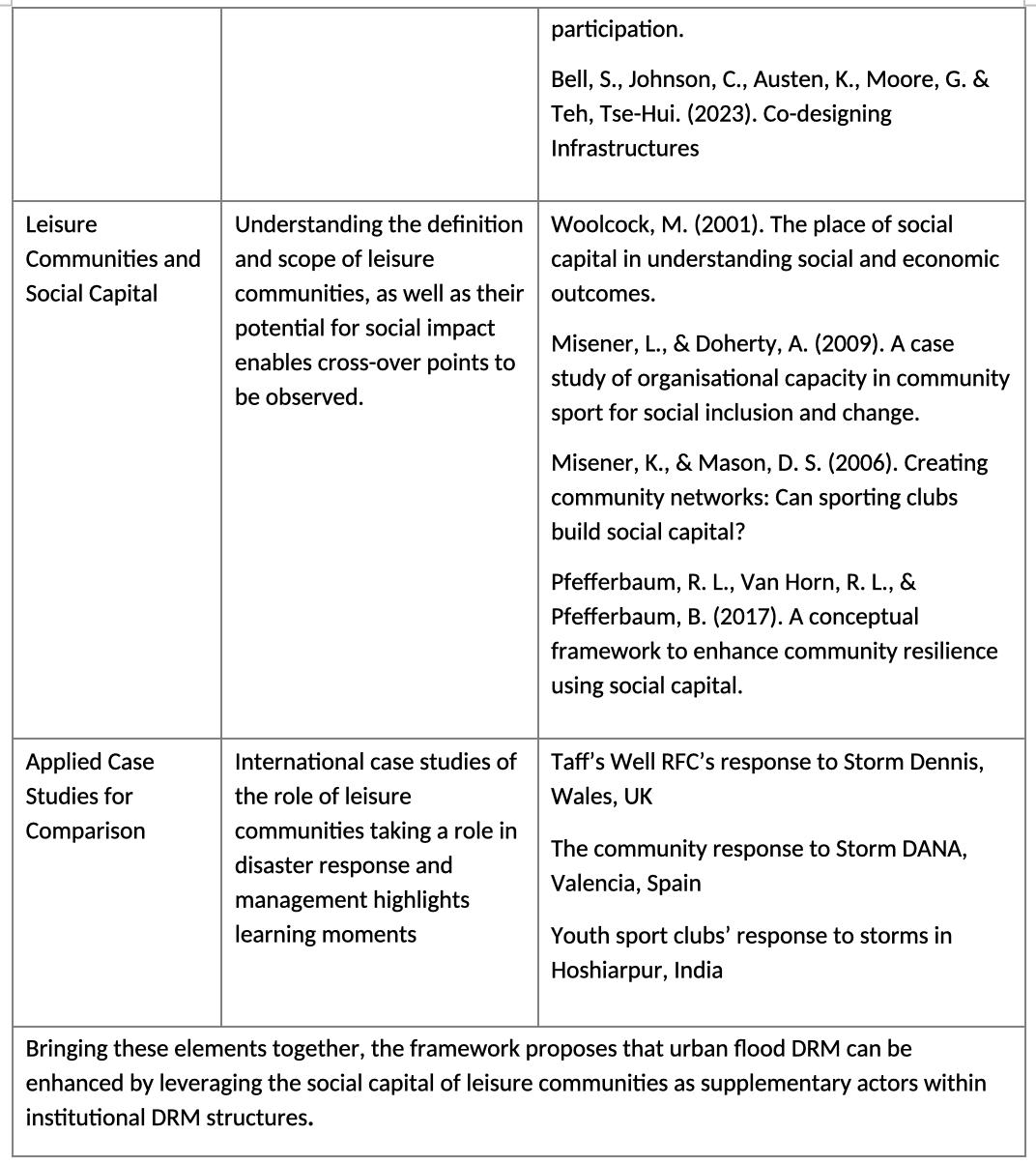
Bringing these elements together, the framework proposes that urban flood DRM can be enhanced by leveraging the social capital of leisure communities as supplementary actors within institutional DRM structures.
1.3. Intervention needs assessment
1.3.1 Background to the focus location
York is a city with a population of around 200,000 and is located at the confluence of the Rivers Ouse and Foss in North Yorkshire, England (See Figure 2). This position on the rivers, plus other vulnerabilities created by the nature of the landscape and river flow up- and down-stream of the city, makes York at high risk of river flooding.
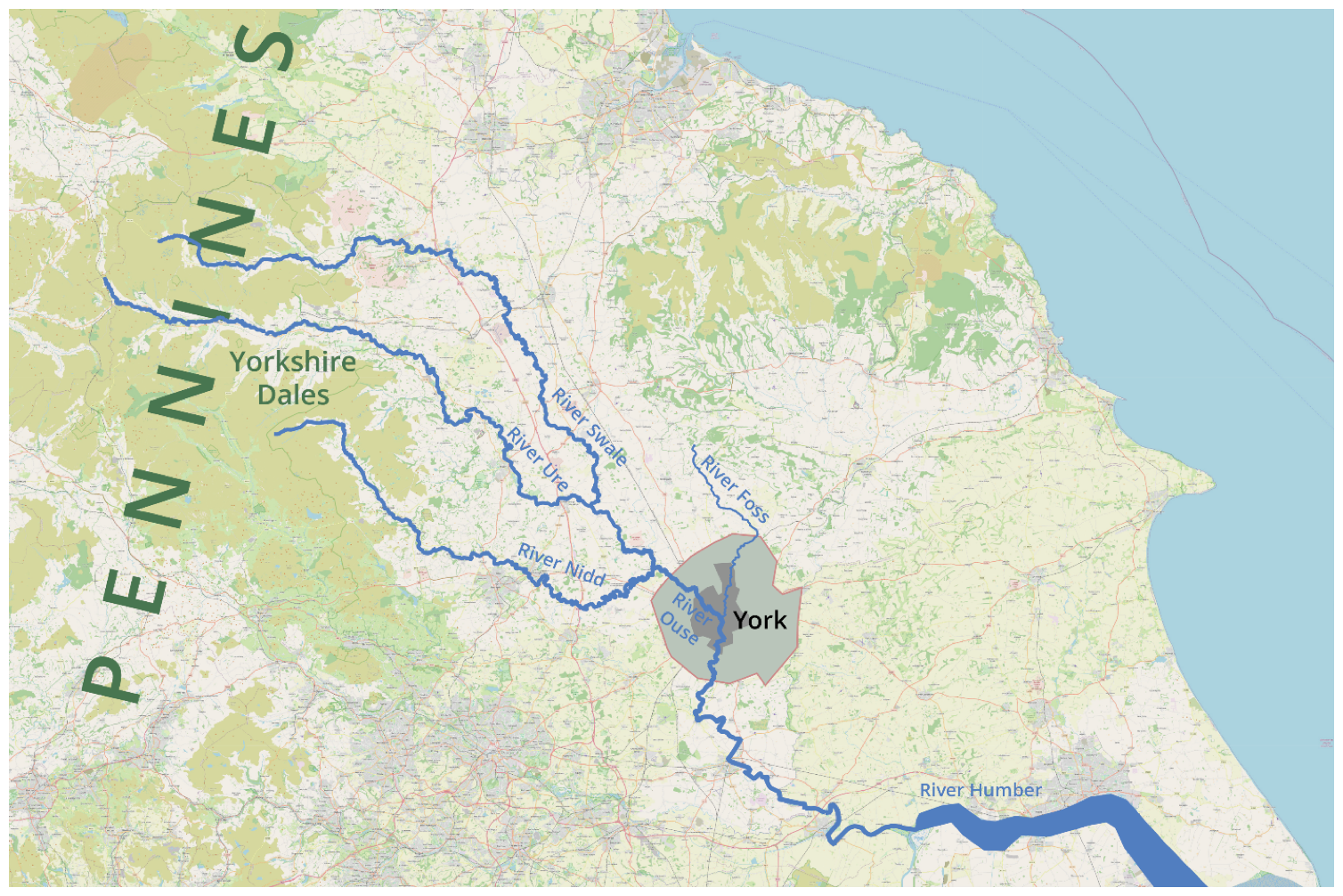
Figure 2. York’s location in the UK. York’s location in the north of England demonstrating the boundaries of the municipality and the built-up area. The major rivers and geographical areas that affect flooding in the city are labelled. Own work, 2025.
This map demonstrates York's geographic position at the confluence of major river systems draining from the Pennines and Yorkshire Dales, illustrating the factors that create flood vulnerability through both precipitation-driven and tidal mechanisms.
Flooding Vulnerability
York is positioned at the downstream end of the Vale of York glacial valley, where the Ouse collects flows from three major upland catchments (Ure, Swale, Nidd) which are fed by streams on the Pennines and Yorkshire Dales. The river is semi-tidal, being affected by the Humber estuary downstream. The river Foss adds to the flood risk primarily through backwater effects (Encyclopaedia Britannica, n.d.). This creates additional vulnerability when Ouse flooding forces water upstream into eastern residential areas. York has two main flood mechanisms that describe its risk profile:
Precipitation-driven peaks: Upland rainfall or snowmelt is funnelled into the city, creating a bottleneck where embankments and other structures limit the ability to disperse the water. This increased flow is generally predictable, as there is usually at least a 24-hour delay between upland precipitation and high water in the city. Clifton Ings and other upstream dispersal areas are also effective at delaying the and slowing the flow of water through the city.
Backwater effects: Tidal influence from the Humber or high Ouse levels reverse flows into the Foss, flooding areas otherwise protected from direct river overflow. Winter events frequently combine both mechanisms, increasing flood severity.
Disaster Risk Management Implications
This complicated flood mechanism present in the city requires complex defence strategies. The natural flood storage (Clifton Ings), built defences (Foss Barrier), and active operational decision-making from authorities during flood events must align to protect the city from flood damage.
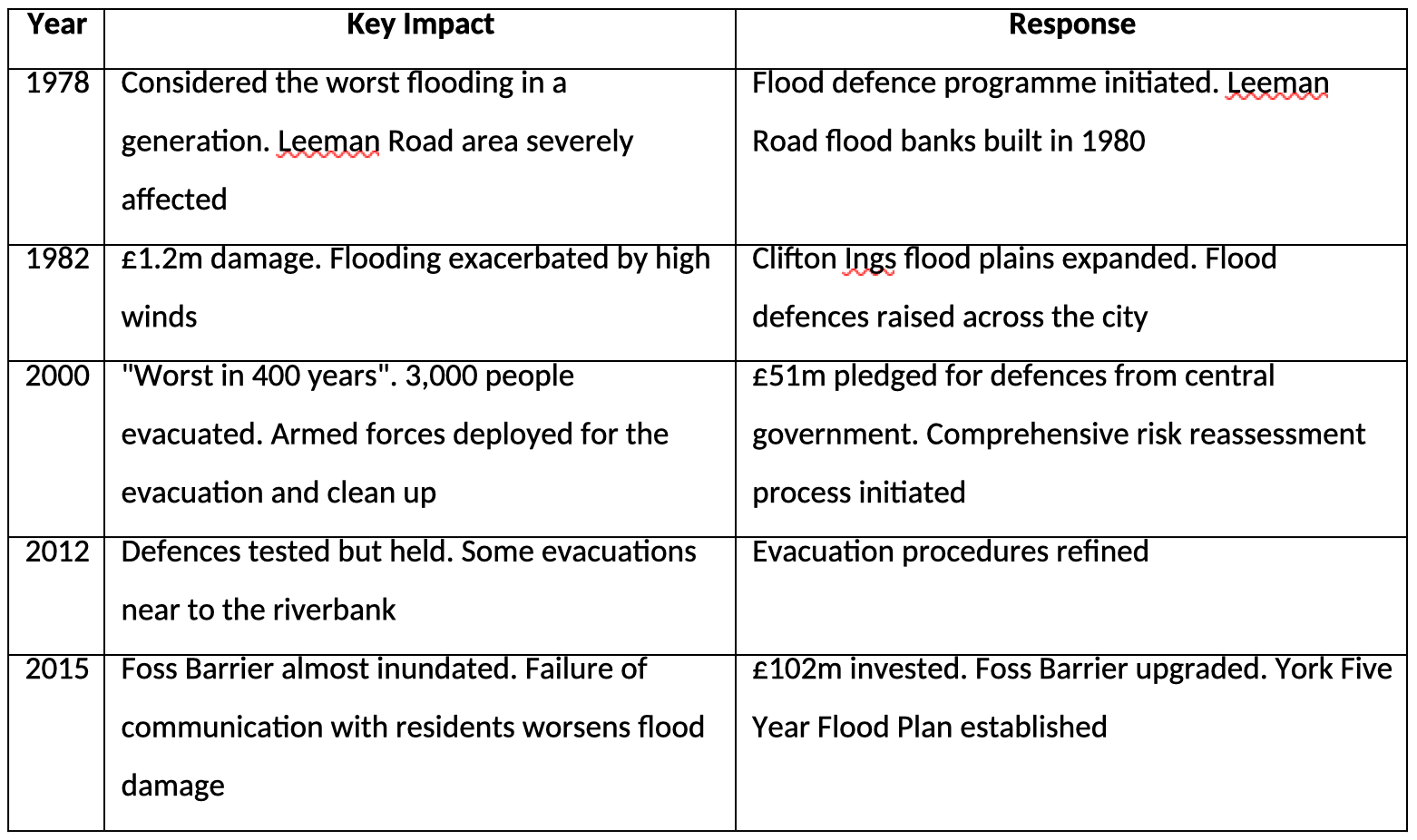
Table 1. Overview of significant flood events over the past Ca 50 years in York. Table highlighting the impacts and response to significant flood events. Own work, 2025. Information synthesised from Environment Agency (2020, 2021, 2025a, 2025b), City of York Council (n.d.-a, n.d.-b, n.d.-c), and York Civic Trust (n.d.)
Three flood events: 1982, 2000, and 2015, had the impact of driving infrastructure investment and policy change. The 1982 event pushed the authorities to develop York's modern flood defence framework, building the Foss Barrier (1987) and strategic defence improvements including Clifton Ings and Lower Bootham (Local Government Association, n.d.; York Civic Trust, n.d.).
This followed the principle of a reactive adaptation response, rather than proactive capacity building.
The 2000 floods exposed ongoing vulnerabilities, despite 1980s-era interventions. Critically, previously low-risk areas experienced flooding, demonstrating that built defences struggle with changing conditions (Environment Agency, 2020). The £51 million post-flood investment and comprehensive risk reassessment showed that the city required integrated approaches combining physical defences, forecasting systems, and better land-use planning (Local Government Association, n.d.).

Figure 3. Ouse Flood. Flooding of the River Ouse in November 2000 demonstrating the extent of major flood events in the city centre. Copyright Sam Fryers, 2000
The 2015 Boxing Day flood showed a communication breakdown under extreme conditions. The Foss and Ouse reached record high water levels, but only 453 properties flooded, suggesting the effectiveness of the defence system (City of York Council, n.d.-a). However, the decision to open the Foss Barrier to protect the asset itself, illustrated the difficult trade-offs inherent in flood management (Future Climate Info, 2015; Environment Agency, 2020).
The subsequent £102 million investment programme addressed both technical capacity (barrier upgrades) and systemic coordination (York Five Year Plan) (Local Government Association, n.d.).
Post-2000 Strategic Development
Since 2000, York's flood management strategy has shifted from being mainly focused on infrastructure projects toward integrated resilience frameworks covering four main areas:
Built infrastructure: Ongoing maintenance and climate-adaptive design of embankments and barriers, with defences now designed for climate scenarios until 2039 (City of York Council, n.d.-a, n.d.-b).
Forecasting systems: Enhanced early warning mechanisms and automated alert systems, as the 2015 communications failure demonstrated critical vulnerabilities. (Environment Agency, 2020; GOV.UK, n.d.).
Strategic planning: Mandatory flood risk assessments in development decisions and floodplain planning represent preventive rather than reactive approaches (York Civic Trust, n.d.).
Community engagement: Coordination frameworks involving voluntary sector organizations for prevention, evacuation, and recovery operations. These remain largely ad hoc rather than formally integrated (Local Government Association, n.d.).
This evolution demonstrates progressive learning from successive flooding events, though opportunities in community-level preparedness processes are evident. The absence of formalised community roles in flood planning offers potential, particularly given evidence from international cases where informal networks provided critical first-response functions.
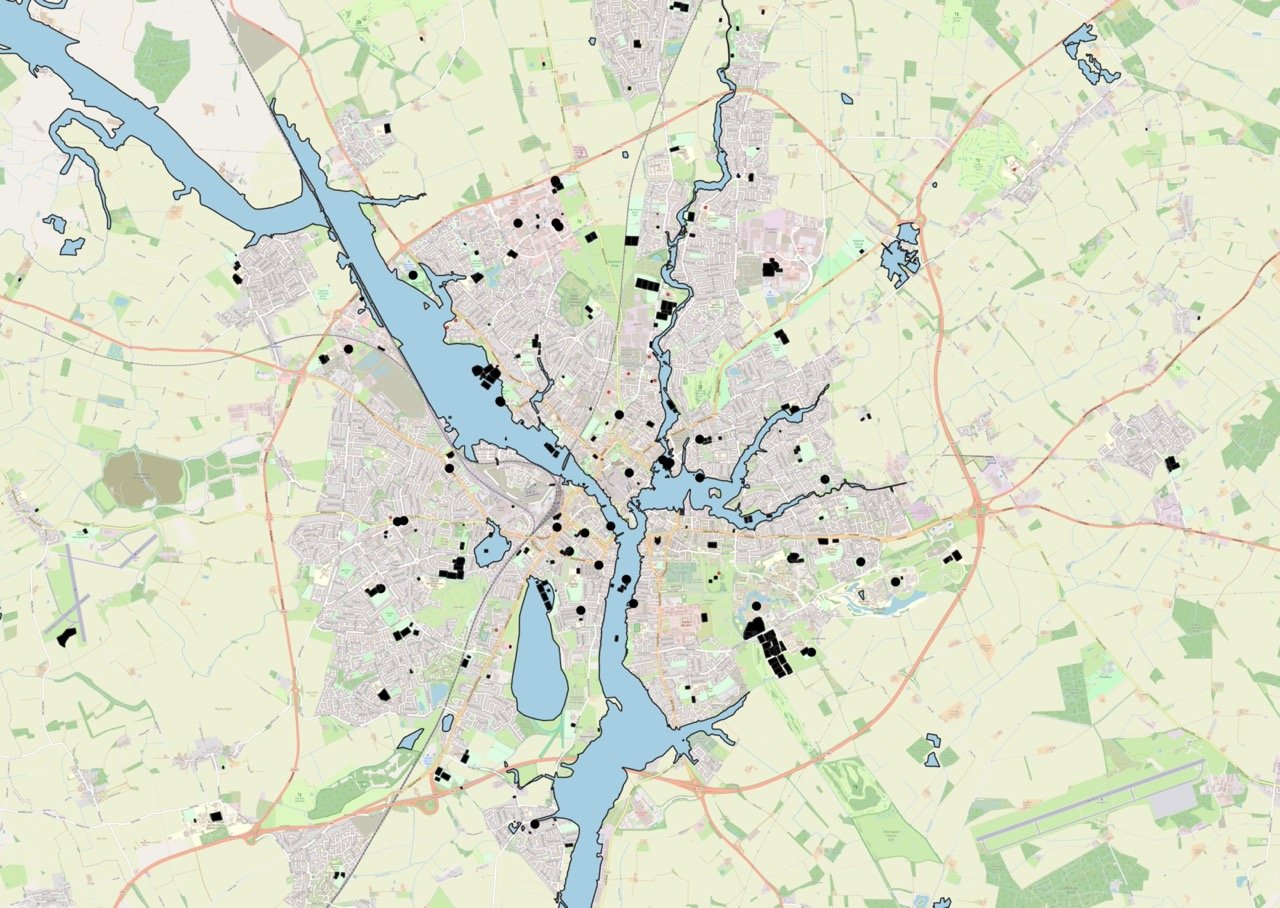
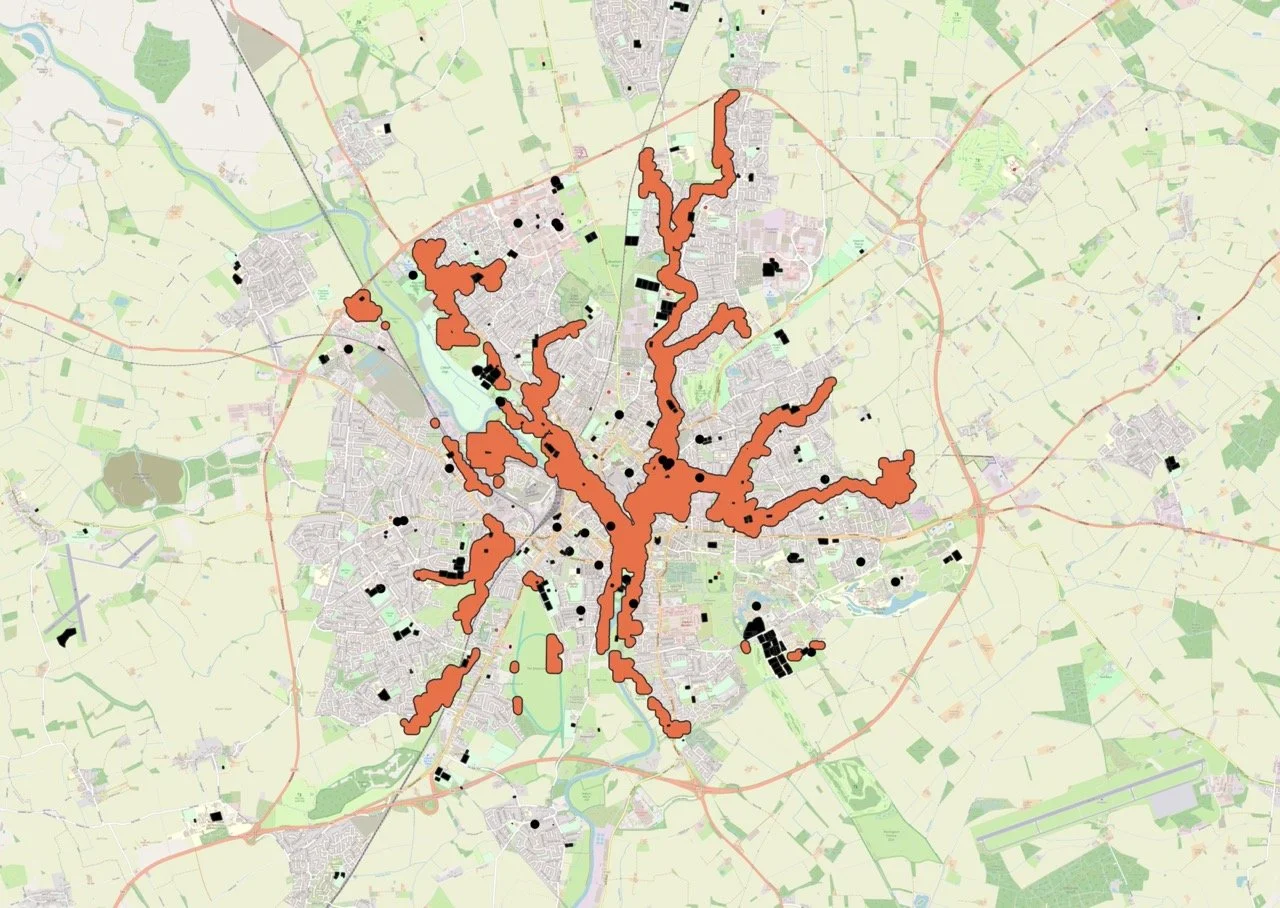
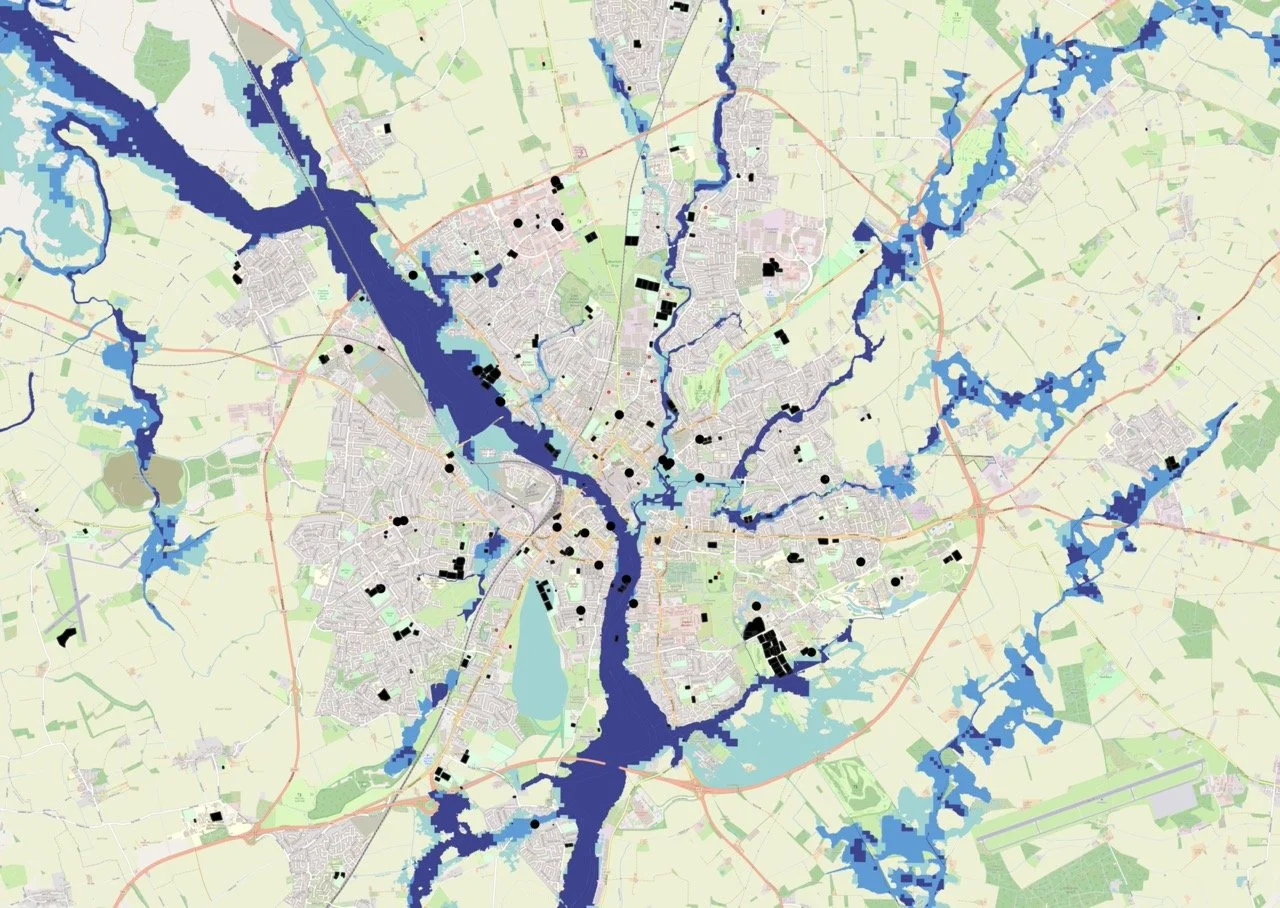
Figure 4. York Flooding. Flood maps of York, UK with locations of ‘leisure communities’ highlighted in black. (QGIS, 2025). From left to right:
Historic areas of flooding, (Environment Agency, 2025-a)
Areas considered at risk of flooding, (Environment Agency, 2018)
Flood risk, categorised by level (dark blue = high risk, light blue = low risk), (Environment Agency 2025-b)
These maps demonstrate the extensive areas of York at flood risk and the concentration of leisure communities within or nearby high-risk zones, supporting the rationale for integrating these organizations into DRM frameworks given their geographic exposure and local embeddedness.
1.3.2 Mapping stakeholders & roles
Leisure communities, beyond their function as places of recreation and entertainment, also act as communities of engagement and trust and reflect broader structures in society. These communities are associated with the building of social capital amongst local people (Woolcock, 2001).
In addition to the social context of the leisure activity, this social capital can foster local inclusion and serve as focal points for change in a society (Misener and Doherty, 2009). Misener and Mason (2006) state that sporting associations in particular often have a bridging role in local communities, linking individuals of different social classes to form more inclusive networks.
In connection with this leisure context, Pfefferbaum, et al, (2017) developed a conceptual framework of social capital and community resilience, suggesting that networks of trust, mutual support, and shared identity are essential to preparing for and responding to disasters.
Key to understanding the connection between leisure communities and disaster resilience is the way that they develop networks through what social scientists describe as bonding, bridging and linking functions (Woolcock, 2001; Misener & Mason, 2006; Misener & Doherty, 2009).
Important definitions (Woolcock, 2001)
Social capital: "the norms and networks that facilitate collective action for mutual benefit."
Bonding social capital: Strengthens ties within homogeneous groups
Bridging social capital: Links people across diverse social divides
Linking social capital: Connects communities to formal institutions of power and resources
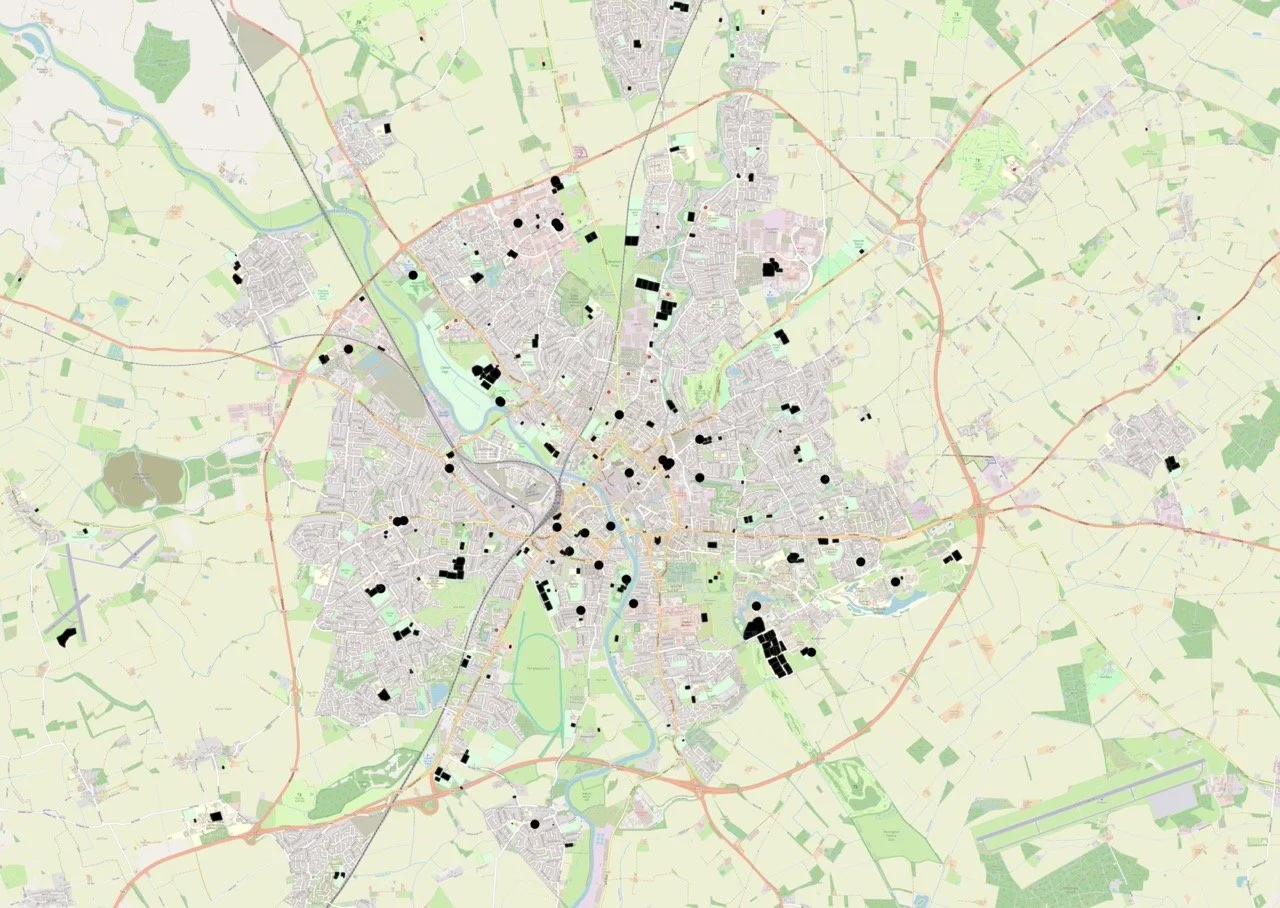
Figure 5. Leisure Communities. Locations of ‘leisure communities’ in York, UK (marked in black). QGIS, 2025. This shows how leisure communities are dispersed throughout York's residential areas, providing potential neighbourhood-level response capacity across the city's flood-prone areas.
The Scope and Structure of Leisure Communities
Organisational Form & Membership Structure
Leisure communities range from informal, semi-organised groups, such as neighbourhood walking clubs, to small local clubs with financial and leadership structures, through to formal organisations with designated governance and external affiliations, such as regional or national sports associations.
Misener and Mason (2006) state that organizational structure directly connects to network strength. Informal groups may facilitate close interpersonal ties through regular interaction, while formal organisations may cultivate cross-community connections and institutional relationships by engaging with diverse participants and external bodies such as municipalities, national associations, or sponsors.
Locality and Place-Based Identity
Leisure communities are physically located in venues, often centrally sited in residential areas, such as community centres, parks, playing fields, allowing for what Woolcock (2001) calls the "contextual embeddedness" of social capital, meaning that the community's locale enhances social connection and perhaps local pride. This rootedness in their local area and connection to that place gives them potential to act during a localised crisis.
Social Network Functions within Leisure Communities
Internal Cohesion
Within leisure communities, strong internal ties develop through regular interpersonal interaction, shared goals, and emotional connections. Team sports, for example, require cooperation and trust. Misener and Mason (2006) state that the sense of togetherness in local sports clubs reinforces members' sense of belonging and obligation to one another. This unity and shared purpose could be mobilised during an emergency situation.
Cross-Community Connection
Leisure communities are often made up of members from diverse backgrounds, which can develop networks that transcend social boundaries. Misener and Doherty (2009) observed that inclusive sport initiatives can often go beyond social, ethnic, and economic divides, creating relationships that connect otherwise disconnected groups.
Institutional Relationships
When leisure organisations establish relationships with external stakeholders such as municipalities, sponsors or regional associations, they gain access to funding, facilities, and training (Misener & Mason, 2006). From a community resilience standpoint, the ability to coordinate between informal community networks and formal systems of authority is key in effective disaster response (Pfefferbaum et al., 2017).
Community Development through Leisure
In its highest form, well-functioning leisure organisations can become what Misener and Doherty (2009) describe as "agents of social change" with impact beyond the boundaries of the club itself. This can be achieved in four areas: inclusion, empowerment, civic engagement, and social learning.
Inclusion
Leisure activities, being largely focused on ability in the activity itself, are often accessible spaces, even for marginalised groups. Participation in community sport or recreation can build self-esteem, reduce isolation and loneliness, and help integrate new members of the community. These inclusive traits strengthen community cohesion, which forms a basis for community resilience.
Empowerment
Participation in leisure activities allows people to develop leadership and organisational skills. Misener and Mason (2006) state that volunteer roles in sports clubs provide members with experiences in leadership and project management. Empowered members enhance community capacity to self-organise when faced with challenges.
Civic Engagement
Leisure communities are often involved in voluntary local activities outside of their own club, such as helping at local events, maintaining community facilities, or representing the local area at city-wide events. Woolcock (2001) makes the connection between this involvement and broader patterns of democratic participation, suggesting that well-functioning leisure communities demonstrate higher civic engagement.
Social Learning
Through leisure activities, members acquire social knowledge: how to collaborate, resolve conflict, and adapt to changing circumstances. These learning processes mirror those found in theories of resilience and align with Pfefferbaum et al.'s (2017) focus on relational networks as key to adaptation in disaster contexts.
Leisure Communities and CBDRM
Communication Networks and Mobilisation Channels
Leisure communities control broad communication networks such as membership lists, social media groups, newsletters, and informal word-of-mouth channels. These can be repurposed for sharing warnings, coordinating volunteers, or distributing support. From the perspective of CBDRM, such pre-existing structures reduce the effort of mobilisation. Pfefferbaum et al. (2017) note that during emergencies, established networks accelerate the sharing of information and resources, enhancing adaptive capacity.
Collective Leadership and Local Legitimacy
Leisure communities help develop local leaders, in the form of coaches, club organisers and event coordinators, who gain managerial and social skills while building legitimacy in the local community. This legitimacy and managerial capability can allow individuals to take on coordination roles during disasters, facilitating local decision-making and connecting community members with authorities. Pfefferbaum et al. (2017) state that these skills are key to success in emergency situations. The leadership structures within leisure communities therefore represent ready-made governance frameworks for CBDRM initiatives.
The crossovers between leisure and disaster risk management demonstrate that the same relationships that make communities strong in times of peace make them resilient in times of crisis. Leisure organisations foster cooperation, build trust, and establish leadership, all aspects that enable effective CBDRM.
1.3.3 Municipal & Civil roles
Below is an overview of the responsible authorities and their relationships during a river flooding incident in York, from municipal to community levels
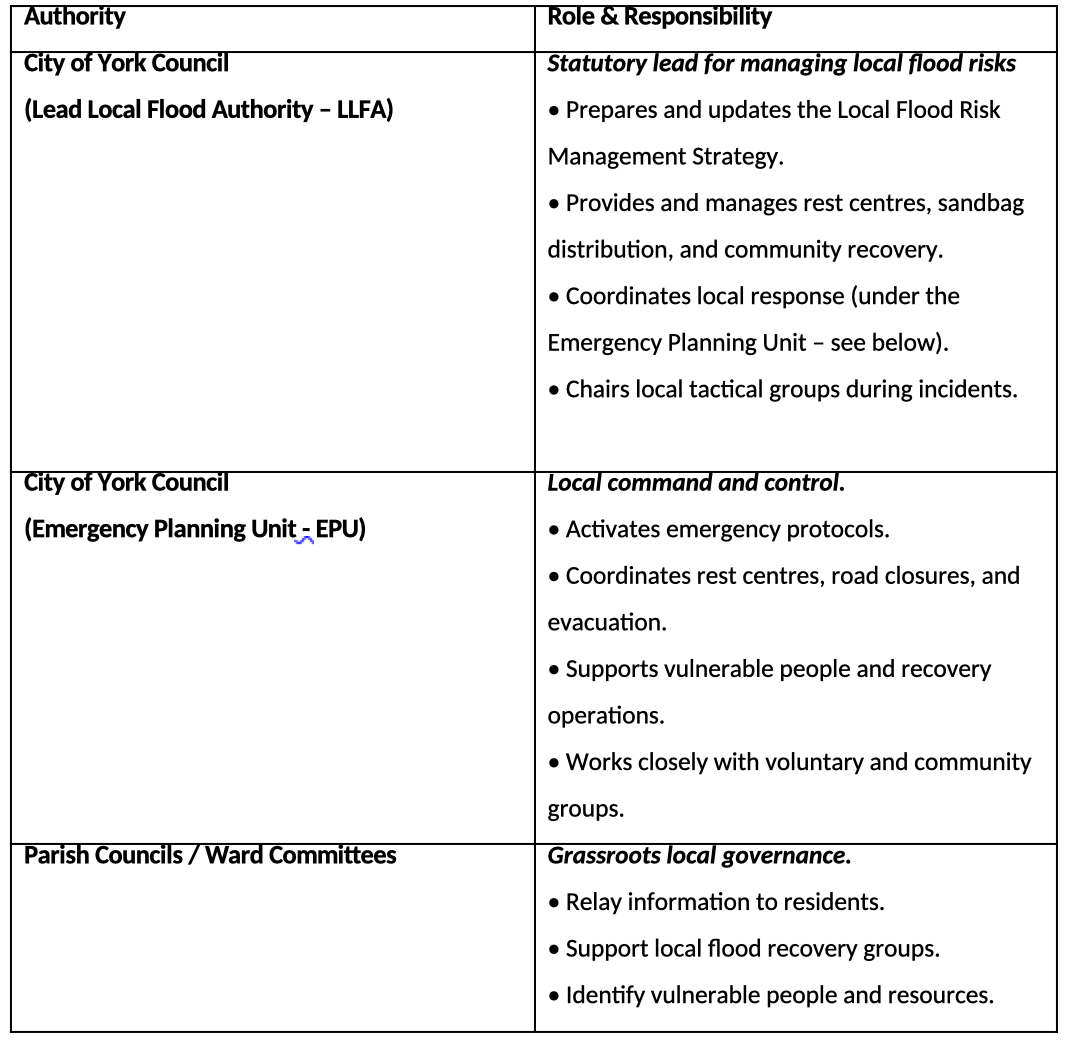
Table 2. Overview of authorities & roles – Municipal response. Based on the Flood and Water Management Act (2010), Civil Contingencies Act (2004), and York’s Local Flood Risk Management Strategy. Own work, 2025
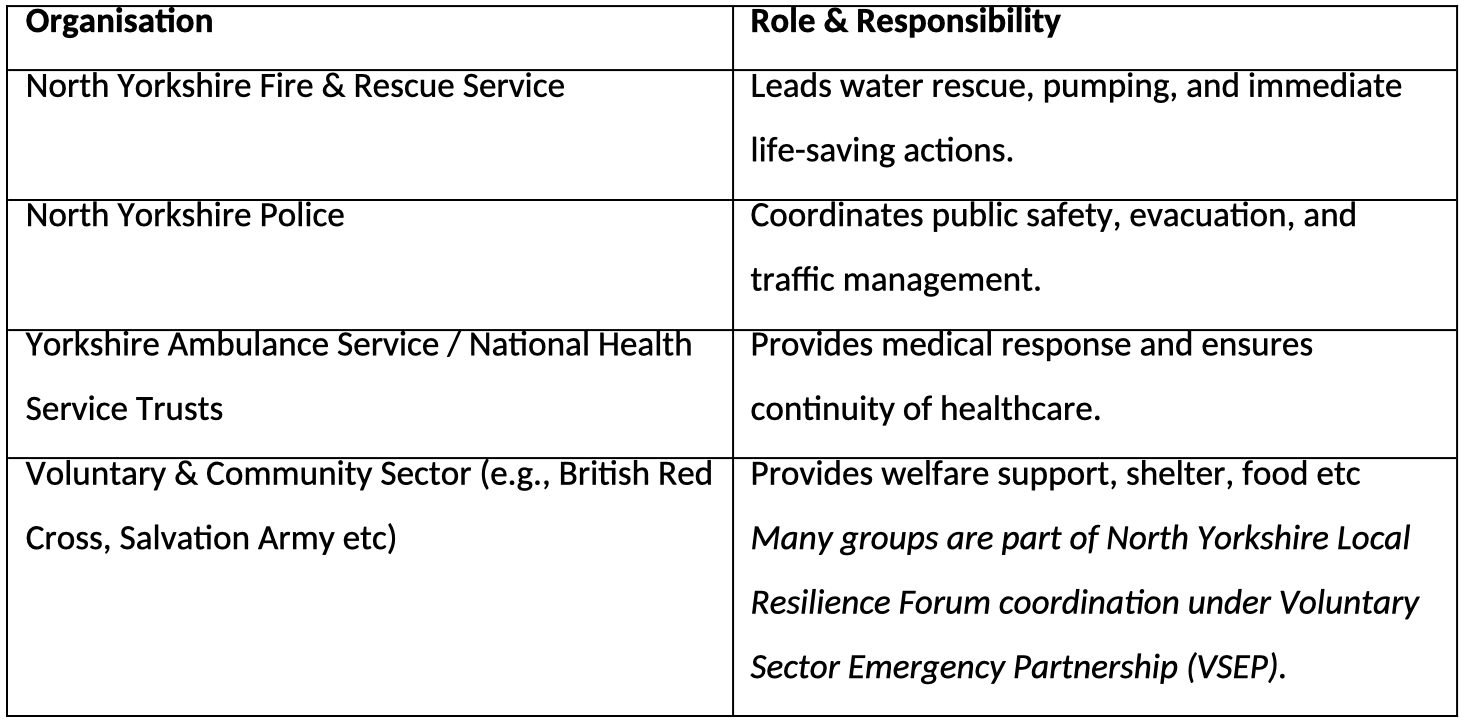
Table 3. Overview of authorities & roles – Operational response. Based on the Flood and Water Management Act (2010), Civil Contingencies Act (2004), and York’s Local Flood Risk Management Strategy. Own work, 2025
1.3.4 Case studies
Taff's Well Rugby club's response to Storm Dennis, Wales, UK, 2020
Storm Dennis in 2020 exposed critical gaps in formal emergency response in South Wales, where Taff's Well Rugby Club mobilised its volunteer network and facilities to provide shelter and support in debris removal. The club activated its bonding capital through member mobilisation, and bridging capital beyond its members, to support displaced residents that lacked alternative accommodation.
This case demonstrates that leisure communities with established volunteer structures, physical infrastructure, and local support can function in an emergency response role when the formal systems lack capacity (Cardiff Journalism, 2020; BBC News, 2020).
The community response to Storm DANA, Valencia, Spain
Storm DANA in October 2024 triggered large-scale community self-organisation in Valencia, where volunteers used sports facilities and community centres as distribution hubs for both human and animal relief operations (Orato World, 2024). Social networks from sports clubs, schools, and community organisations provided coordination of mud clearance, debris removal, and supply delivery to isolated neighbourhoods, often arriving before formal agency response.
The mobilisation demonstrated both the strengths and limitations of informal networks. While social capital allowed for a swift response, the authorities' attempts to later centralise volunteer management created friction, as volunteers prioritised speed over formal authorisation (Associated Press, 2024).
The recovery process has gone beyond physical reconstruction to restoration of shared spaces and collective identity, highlighting resilience as a socio-spatial rather than purely infrastructural process (Placemaking Europe, 2025). This case demonstrates that pre-existing social networks rooted in leisure activities enable rapid disaster mobilisation, though integration with formal coordination structures remains a critical challenge requiring prior planning.
Youth sport clubs’ response to storms in Hoshiarpur, India
The flood response in Hoshiarpur district, Punjab in 2023, highlighted youth sports clubs as critical actors in local relief operations, deploying volunteers for evacuations, animal rescue, and logistics support, including providing fuel for tractors and generators at relief camps. While government agencies conducted large-scale evacuations, youth organizations operated at the neighbourhood level, acting quickly and providing a connection with the formal authorities. In this case leisure organisations functioned as local responders, while providing linking capital between affected populations and institutional relief operations (Tribune India, 2023; Deccan Herald, 2023).
Three factors are present in each of these cases.
Social capital, particularly bonding and bridging relationships, enables rapid self-organisation under crisis conditions.
Place-based infrastructure, such as community venues or other facilities provides trusted, accessible locations that can be rapidly repurposed.
Informal governance structures within leisure organisations become community leadership in an emergency situation.
These cases show that leisure communities possess the assets to respond to disasters beyond simply having access to facilities. Their governance structures enable them to be responsive and flexible to different emergency situations. Formal integration into disaster management frameworks could harness this capacity.
2. Objectives
2.1 General objective
The objective is to design and evaluate approaches for integrating leisure communities, such as sports and other local hobby clubs, into local disaster risk management planning, while strengthening their role and capacity as contributors to disaster response and resilience.
2.2 Specific objectives
To identify and document at least three leisure communities within the study area that demonstrate potential for contributing to local disaster risk management planning.
To apply general methods for integrating communities into local disaster risk management planning, into the study area leisure community context.
To formulate and present at least three actionable recommendations for municipal disaster risk management planners on how to systematically include and support leisure communities within ongoing disaster risk management strategies.
These objectives directly guide the intervention design and structure of the measurement & evaluation presented in Chapters 3 & 4.
3. Intervention proposal
3.1 Methodology
3.1.1 Research Design: Participatory Policy Design Approach
The proposal uses a participatory policy design methodology (Bason, 2014; Ansell & Torfing, 2021), combining qualitative research with collaborative co-design to ensure that the intervention is based upon both empirical evidence and stakeholder perspectives. This approach aligns with the UK government's ambition to co-produce public policy with stakeholders (UK Government, 2022).
The objective of this intervention is to design a city-level policy framework that formally integrates leisure communities into disaster management planning for flood preparedness, response, and recovery.
Policy intervention
Importantly, this intervention should be considered to be a policy intervention, rather than a physical or social intervention. The latter types directly and very locally affect how an organisation operates. A policy intervention refers to actions taken by governments or institutions to influence larger strategic ambitions and to mitigate perceived negative trends.
In a municipal context, policy interventions can take various forms, including fiscal stimulus, environmental policy adjustments, and regulatory changes (Ceres2030, 2019).
In respect to DRM, a policy intervention would aim to build upon structures that have proven benefits, align policy with international standards, or adjust strategies that have not demonstrated the results that were aimed for.
Community-Based Disaster Risk Management (CBDRM) and Collective Capacity
Community-based disaster risk management (CBDRM) refers to participatory methods where local communities are involved in assessing, planning, and implementing disaster risk reduction measures. In comparison to top-down emergency management, CBDRM focuses upon local knowledge, networks, and capacities. Pfefferbaum et al. (2017) use social capital as a central tool in community resilience frameworks.
Their model identifies three elements of community resilience:
Adaptive capacity: the ability to learn and reorganise in response to disruption.
Absorptive capacity: the ability to withstand and recover from shock.
Transformative capacity: the ability to implement long-term structural change.
Community networks and relationships enhance each of these capacities in the following ways:
Adaptive capacity is developed through information and knowledge exchange within trusted groups. Absorptive capacity connects with support systems and cross-community cooperation, while transformative capacity is developed through community groups coming together to advocate for their needs and connect with institutional power structures.
As seen in previous chapters, the strengths of CBDRM and leisure communities are very much aligned, with leisure communities already in possession of the necessary infrastructure to combine the two concepts effectively.
3.1.2 Assessment of intervention needs
In previous chapters the case has been made for formalising the integration of leisure communities into the disaster planning processes in York. In order to design the policy intervention itself, the preconditions and long-term goals need to be first identified.
A Theory of Change (ToC) has been used to help structure this assessment, as this format outlines how a desired change can be brought about by linking activities to long-term goals. It helps to identify the inputs and activities, clarifying which interventions drive outcomes. This strengthens planning, evaluation, and understanding of how the actions achieve sustainable, long-term impact (Theory of Change, n.d.)
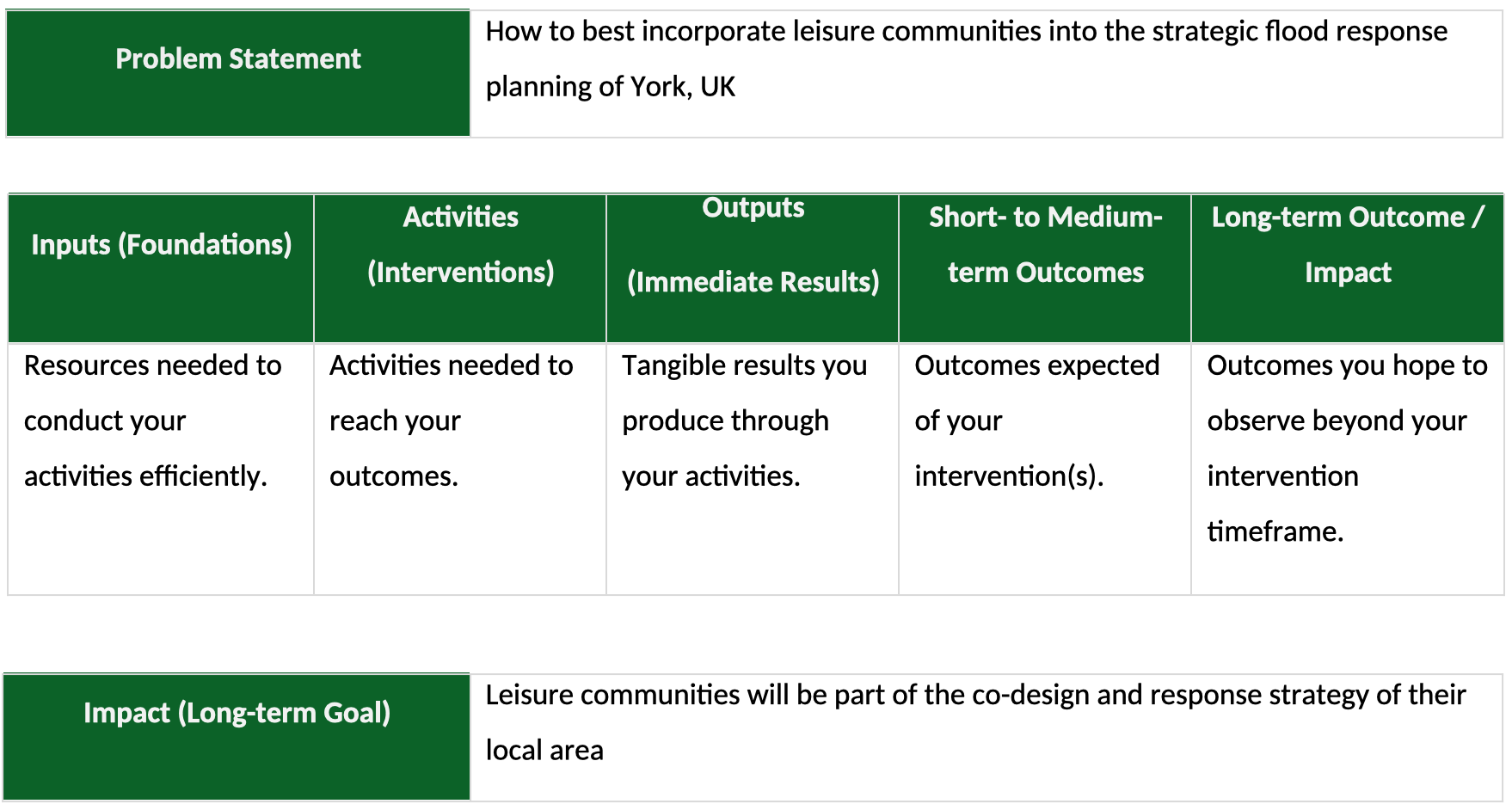
Table 4. Theory of Change model. The initial problem statement and optimal impact of a policy intervention into utilising leisure communities in a flood response plan. Own work, 2025
Problem Statement
Leisure communities (sports clubs, hobby associations, and recreation centres) in York have significant community networks and local infrastructure but remain largely excluded from formal flood preparedness and response planning. Their potential for coordination, outreach, and community resilience is underutilised.
Impact (Long-term Goal)
Leisure communities become recognised, trained, and integrated partners in York's flood preparedness, response, and recovery strategies, co-designing and participating in city-wide disaster management frameworks.
Inputs (Foundations)
Initiating a formal partnership between City of York Council, the Environment Agency, and leisure organisations. Access to training, communication and safety tools, and small funding streams for preparedness activities. Policy support through York's Local Flood Risk Management Strategy.
Activities (Interventions)
City of York Council and the Environment Agency map and connect with leisure communities in or nearby flood-prone locations. Establish 'Pilot' leisure communities in order to conduct participatory workshops to identify potential roles (e.g., emergency shelter, volunteer coordination, equipment storage etc). Deliver joint emergency preparedness training with leisure clubs and official responders.
Together with the 'Pilot' communities, develop a co-design programme integrating leisure clubs into York's Flood Resilience Network, considering capacities of the communities.
Outputs (Immediate Results)
A database of leisure community assets and capacities, created by City of York Council and the Environment Agency and shared with the agencies identified in Tables 1 & 2.
Signed memoranda of understanding (MoUs) between the council and local communities to establish the 'Pilot' locations.
Community-led flood response programme, developed together with the authorities and the communities.
Short- to Medium-term Outcomes
Leisure communities adopt and test flood preparation roles and awareness.
Increased coordination between municipal responders and leisure communities.
Strengthened local community trust and participation in flood planning.
Long-term Outcome / Impact
A co-created and governed flood management framework in which leisure communities actively participate in planning, response, and recovery, thereby improving local resilience, community capacity, and adaptive capacity in York.
3.2 Description of the sessions
The design of the sessions involved in the intervention is led by the Activities, Outputs and Outcomes described in the ToC. The general structure follows a 'Plan, Do, Check, Adapt (PDCA)' formula, where actions are considered, trialled and reflected upon in a cycle, with the aim of continuous improvement. A true participatory approach is key here, with Arnstein's (1969) ladder of citizen participation always leading the process design.
3.2.1 Phase 1: Contextual and Policy Analysis
As outlined in the ToC: City of York Council and the Environment Agency map and connect with leisure communities in, or nearby flood-prone locations. In order to affect this, a Document Review should be conducted.
This review would analyse local, regional, and national DRM and flood management policies. Examples of such documents have already been applied in this work, such as the Flood and Water Management Act (2010), Civil Contingencies Act (2004) and York's Local Flood Risk Management Strategy. Additional references, such as the North Yorkshire Local Resilience Forum protocols and a deeper understanding of the application of policy documents should be conducted by those in the various authorities, who understand the daily practical consequences of applying these policy documents.
Institutional Mapping should be conducted in order to identify actors and governance structures involved in York's flood preparedness. As City of York Council and the Environment Agency would lead this action, then this mapping process should be completed relatively quickly. A more comprehensive mapping process, concerning the identification and locating of leisure communities should take place. This will require definitions and specifications of suitable leisure communities with relation to their role in DRM.
Once a complete list of leisure communities has been made, their locations can be plotted using a Geographical Information System (GIS), allowing for other data layers to be mapped on top.
A suitable additional data layer would include flood modelling data, indicating which communities are in or near flood-prone locations. This information would help to identify potential 'Pilot' communities to start the engagement with.
Another suitable data layer would be the various boundaries of authorities. As seen in Table 2, different authorities are responsible for different responses. Knowing which local parish or ward had responsibility for the location of the community would be important information.
Brought together, this data allows for accurate coding and selection of suitable 'Pilot' leisure communities, who can be contacted and their capacities assessed. In Figure 6, a selection of potential 'Pilot' communities has been made. This selection is based upon the location of the community in relation to flood risk.
Locations 1 & 3 would likely be severely affected by flooding, as would their local area. With many of the community members being based locally and therefore also affected, the organizational networks of the communities could be used to communicate and act in a flooding event.
Location 2 may be affected by flooding, but is at lower risk. It is however located nearby an area of high risk. Again, with its members likely located in the high-risk area, this community could act as a refuge and staging post for flood relief.
This selection should be considered indicative and is somewhat incomplete, as it lacks an in-depth understanding of the specifications and detailed flood risk mapping, it does however demonstrate the methodology described earlier.
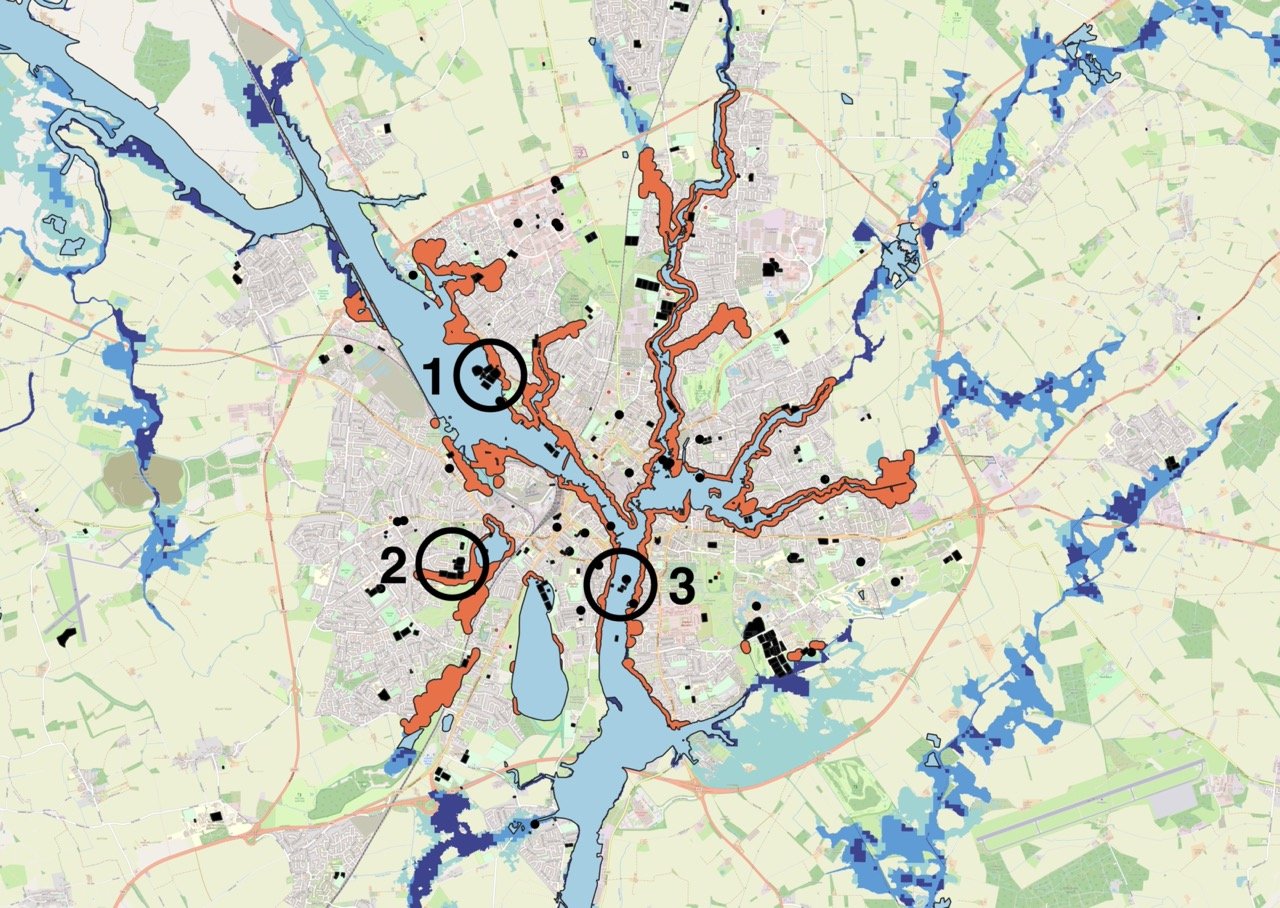
Figure 6. Combined York Flooding. Overlaid flood risk maps of York, UK from Figure 4 with locations of ‘leisure communities’ highlighted in black. 3 locations suitable for intervention investigations circled. QGIS, 2025.
1: Clifton Park Sports – Large community likely affected by flooding
2: York RI – Large community close to those likely affected by flooding
3: Rowntree Park – Large community likely affected by flooding
3.2.2 Phase 2: Stakeholder Engagement and Co-Design Workshops
Once 'Pilot' leisure communities have been established, participatory meetings and workshops are required to identify potential roles for the community and to better understand the capacities and limitations of the community.
Suitable methods for establishing this would include Stakeholder Interviews, likely with representatives from City of York Council, especially the Emergency Planning Unit and Flood Risk Management Team, in order to better understand the concerns related to reliance on voluntary organisations, especially giving these organisations a limited self-determined role.
The local leisure communities should be interviewed to understand their capacity to respond to emergencies and also their willingness to be involved.
Interviews with representatives of the Voluntary & Community Sector (e.g., British Red Cross, Salvation Army, etc - as defined in Table 3) could give insights into the limitations of relying on volunteers, as well as examples of governance structures and operational considerations such as training and communication.
Finally, Environment Agency and Yorkshire Water representatives could give insights on a higher level of policy, as these stakeholders hold a more strategic, umbrella perspective.
In addition to interviews, focus groups, made up of representatives of leisure communities and the other authorities should be brought together to share views and insights, in order to help the communication process and set the ambition expectations.
These focus groups should be designed as workshops, where different scenarios of how leisure communities could be incorporated into disaster management frameworks are discussed.
3.2.3 Phase 3: Intervention Design and Policy Prototyping
Once expectations have been defined, the next phase of the process relates to the design of the policy itself. For this, a Policy Lab setting would work well, perhaps facilitated by the North Yorkshire Local Resilience Forum.
In this lab setting, Policy Prototyping Workshops could be undertaken, using tools derived from design thinking and other creative policy methodologies, such as IDEO (2015) & Kimbell (2019).
The output of this lab setting would be to collaboratively develop a draft intervention model.
After this, using a 'gamification' approach, the proposed policy model could be tested through tabletop exercises or simulated flood scenarios with municipal and community participants.
Once designed and tested, a detailed intervention proposal could be finalised, outlining governance structures, communication protocols, training requirements, and evaluation indicators.
3.2.4 Phase 4: Validation and Refinement
As the final stages of the PDCA cycle, the process must be checked and then adapted. This begins with validation from external experts. Since Environment Agency and Yorkshire Water representatives were interviewed in Phase 2, this would give an opportunity to loop back and gain some insights and reflections on the intervention design from these already involved stakeholders.
Additional insights should be sought from academics in the field of DRM, but also leisure studies. The input of leisure studies experts, especially relating to leisure communities, will help to validate if the interventions align with what is understood around community structures, motivations etc.
Feedback from these stakeholders should be incorporated into the finalised policy, especially concerning feasibility, scalability and the alignment with statutes and regulations.
A programme of testing should be designed whereby simulated field tests of the policy or a controlled roll-out of the policy under real conditions is carried out.
The simulated field tests could be incorporated into training exercises in order to give community members more realistic expectations of the conditions they will be working in.
A roll-out of the policy under real (controlled) conditions has higher risk of failure, though if the specification and role of the capacity of the community is well-prepared, a negative outcome could be avoided, even in the case of the policy roll-out not happening as planned. A real-life roll out would give the best quality of real-world data, in order to move on to the adaptation phase of the cycle.
With the data gathered from the check phase, the policy can be adapted to take into account real-world conditions and actual outcomes of the policy. As stated, as a process of continuous improvement, the policy should always be reviewed and adjusted, as more data of real-world conditions is produced.
3.3 Timing
The overall timescale for this intervention process depends on a number of factors and would need to be defined in advance together with the stakeholders (especially those in the lead of policy, such as City of York Council).
Policy timescale would likely be the main factor. As policy is usually dictated over a set period, the development of a new policy would have to fit into that development schedule. Some policies are developed on an annual basis, and if this intervention were considered to be an addition or adaptation of an overall framework, it could be developed during an annual cycle.
If, however, policymakers decided that this intervention constituted a more fundamental change in direction, it may form part of the development of a DRM policy needing a longer timescale, perhaps of five years or so.
With regard to the timing of the phases, participatory processes tend to be more time-consuming, given the stakeholder role and the need to reflect and align. As a guideline, the following timeline could be considered:
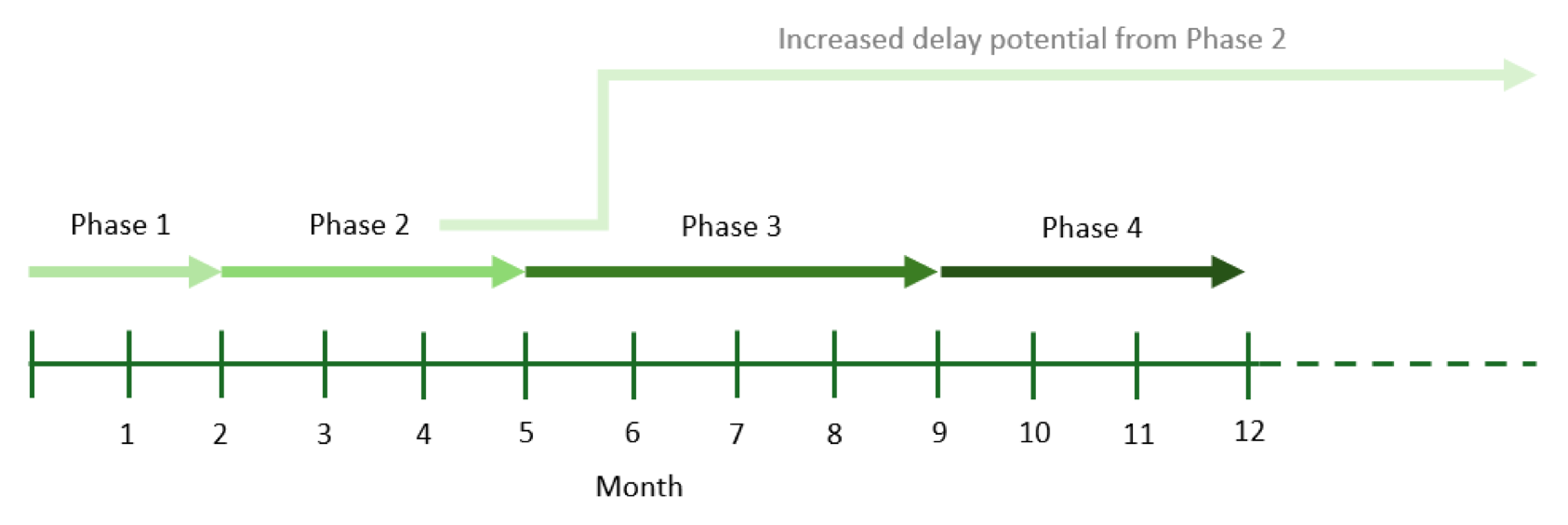
Figure 7. Chronogram. Timeline of the intervention. Own work, 2025.
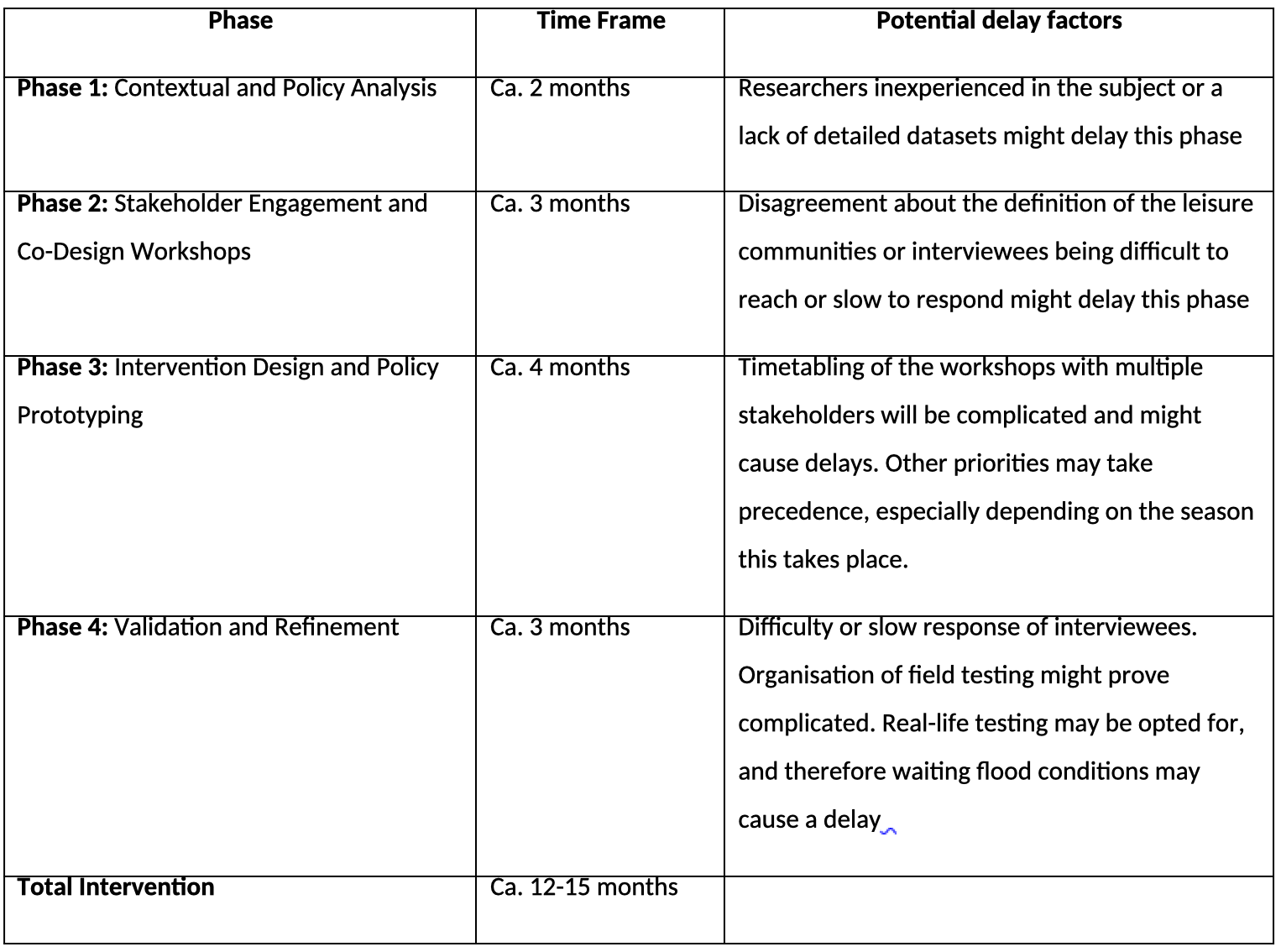
Table 5. Timing of intervention phases. Outline for the amount of time each phase should take to complete. Own work, 2025
4. Monitoring and evaluation
4.1 Outputs/Outcomes
As defined in the Theory of Change, the intervention will have Outputs (Immediate Results), Short- to Medium-term Outcomes and ultimately, a Long-term Outcome / Impact. The measurement metrics of these parts will range from tangible results, to more qualitative results.
With regard to the Outputs, these will be the most quantitative measurements. The database of leisure community assets and capacities, for example, will be a concrete resource that can be produced as a dataset for other municipal purposes.
The memoranda of understanding (MoUs) will be another tangible output of this initiative, and an indication of having met an objective to a satisfactory level, as will the Community-led flood response programme.
This programme’s success however, will depend on how involved the community was in its development, as without the co-creative aspect being fully explored, the intervention lacks an innovative or participatory approach. In order to assess if the process has been conducted successfully with the community, a survey or feedback process based on Arnstein’s (1969) latter of citizen participation should be undertaken during the consultation.
Outputs and outcomes are similar but different things. An output is the immediate, tangible result of an activity, whereas an outcome is the longer-term change or effect that results from those outputs. Put simply, outputs are what is produced. Outcomes are what changes because of it.
Short- to Medium-term Outcomes of this intervention have been defined earlier as:
Leisure communities adopting and testing flood preparation roles and awareness; Increased coordination between municipal responders and leisure communities and strengthened local community trust and participation in flood planning.
These outcomes can be measured through the planned strategic reviews of the implementation of policy. This review process might be statutory, in the case of the Flood Risk Management Strategy and occur every six years. Alternatively, it could be part of the annual Action Plan Review or as a response to a major flooding event, as happened in 2000, 2020 and 2015, amongst other years (City of York Council n.d.-a,c-e; York Civic Trust, n.d.)
The Long-term Outcome / Impact will be, to an extent, the most difficult to measure, as it is largely intangible. With the exception of the community framework itself, which will have been assessed during the process, the objective to build ‘local resilience, social capital, and adaptive capacity in York’ will be difficult to measure, outside of an academic review of the policy its impact.
Through this academic review, researchers could try to assess the policy against principles of community involvement and capacity building. They can measure social capital using established indicators and establish if the content and process of the policy show evidence of these indicator
Key Performance Indicators (KPIs)
KPI 1: Leisure Community Integration
Specific Objective 1: To identify and document at least three leisure communities within the study area that demonstrate potential for contributing to local disaster risk management planning.
Measurement:
Quantitative metric: Number of leisure communities formally integrated into York's Flood Resilience Network through signed Memoranda of Understanding (MoUs)
Target: Minimum 3 pilot communities by end of Phase 2, 10+ communities by end of intervention period
Data source: Database of leisure community assets and capacities, MoU database maintained by City of York Council and Environment Agency
KPI 2: Participatory Engagement Quality
Specific Objective 2: To apply general methods for integrating communities into local disaster risk management planning, into the study area leisure community context.
Measurement:
Qualitative-quantitative hybrid: Participatory engagement assessed using Arnstein's (1969) Ladder of Citizen Participation, measuring whether integration achieves "partnership" (rung 6) or "delegated power" (rung 7) rather than tokenistic "consultation" (rung 3).
Indicators:
Community members co-design flood response protocols (not just consulted)
Leisure community representatives hold formal roles in decision-making bodies (e.g. York Flood Risk Management Partnership)
Communities have formal authority over specific response functions (e.g., shelter activation, volunteer coordination)
Data collection: Post-workshop surveys, interview feedback from community participants, documentation of formal role.
KPI 3: Operational Capacity Development
Specific Objective 3: To formulate and present at least three actionable recommendations for municipal disaster risk management planners on how to systematically include and support leisure communities within ongoing disaster risk management strategies.
Measurement:
Quantitative metrics:
Number of leisure community members completing flood preparedness training (target: ≥50 trained volunteers across pilot communities)
Number of leisure facilities equipped with emergency supplies/communication systems (target: 100% of pilot sites)
Response time in simulated flood scenarios: time from alert to facility activation as emergency hub (target: <2 hours)
Qualitative metric:
A community-led flood response programme has been developed, with documented roles, protocols, and communication channels.
Number of co-created recommendations from intervention formally incorporated into York's Local Flood Risk Management Strategy (target: ≥3 actionable recommendations adopted)
Data sources: Training attendance records, exercise evaluations, policy document analysis, stakeholder interviews with City of York Council Emergency Planning Unit
Evaluation timeline:
Baseline assessment: Phase 1 (months 0-2)
Interim evaluation: End of Phase 2 (month 5) and Phase 3 (month 9)
Final evaluation: End of Phase 4 (month 12-15)
Long-term impact assessment: 6-year review cycle aligned with statutory Flood Risk Management Strategy review
The evaluation framework outlined above aims to address an ongoing challenge in CBDRM, that of measuring the impact of processes that have both many ‘moving parts’, in terms of stakeholder needs, and that operate over long periods of time (Pfefferbaum et al., 2017).
The time frame in particular requires a flexible, yet structured approach to measuring impact. MoUs do not simply translate into new governance relationships, or change a leisure community’s adaptive capacity. Long-term impact assessment therefore requires patience and institutional commitment. This evaluation design aligns with DRM theory that promotes holistic resilience assessment, rather than simple technical measurement (Aldrich, 2012; UNDRR, 2015).
The intervention's success should be assessed by measuring whether it fundamentally shifts the relationship between formal authorities and informal community networks under real-world conditions.
4.2 Risks and Limitations of the Intervention
While integrating leisure communities into York's flood DRM framework offers significant potential, the intervention faces several critical risks and structural limitations that may undermine effectiveness or create unintended consequences.
Participation and Representation Bias
The intervention risks reproducing existing power imbalances within community participation structures. Larger, well-resourced leisure organisations with established governance frameworks and municipal connections are significantly more likely to engage effectively in co-design processes than smaller, informal groups (Arnstein, 1969). This creates bias where "louder voices" dominate policy development, potentially excluding marginalised communities whose members face greater flood vulnerability but possess fewer resources (Gaillard & Mercer, 2013).
Geographic and demographic divides
Leisure communities in affluent areas typically demonstrate stronger bridging and linking capital, facilitating easier integration with authorities (Woolcock, 2001). Conversely, communities with larger proportions of lower-income residents or ethnic minorities, for example, may lack capacities necessary to benefit from participatory processes. Without deliberate equity mechanisms such as targeted marketing or support with bureaucracy, the intervention may inadvertently strengthen resilience for residents already in advantaged positions.
Volunteer Burden and Sustainability
The intervention relies on voluntary labour, creating a risk of volunteer burnout. Misener and Doherty (2009) note that community sport organisations already face volunteer retention challenges during normal operations. Adding emergency response expectations significantly increases demands on the same limited membership.
The availability of volunteers may not align with flood timing, and members personally affected by flooding cannot simultaneously respond to broader community needs. The 2015 Boxing Day flood illustrates this, as during the Christmas period, many residents were away from York and therefore unable to help with local relief efforts (City of York Council, n.d.).
Liability and Institutional Risk Aversion
City of York Council may feel risk-averse and therefore limit the intervention's scope, reducing the community role to low-risk activities (information dissemination etc) rather than active response functions such as evacuation coordination, emergency shelter operation etc, where they could prove most valuable. This transforms the intervention from genuine "partnership" on Arnstein's (1969) ladder into tokenistic "consultation," undermining the participatory objectives central to CBDRM.
Coordination Complexity and Role Confusion
Integrating informal leisure networks into formal emergency management systems introduces coordination challenges evident in the Valencia Storm DANA response, where tensions emerged between volunteer self-organization and centralised authority control (Placemaking Europe, 2025).
Without clearly defined boundaries between leisure community responsibilities and professional emergency services, operational gaps or dangerous overlaps may occur.
4.3 Ethical Considerations
When working with communities, there are a number of ethical considerations to be addressed. While not exhaustive, the factors can be grouped into three broad categories.
Consent, Equity, Transparency
It is vitally important to ensure all participants understand the purpose, potential risks, and how their input will be used. They must be free to opt-out at any point, and participation must be voluntary.
In order to allow genuine inclusion across different community groups, especially those less visible or with fewer resources, effort must be made to avoid focusing on the well-connected, larger organisations. While these groups will have the benefit of being easier to reach, it risks only hearing the louder voices, rather than the smaller communities.
Decision-making and policy design processes must be open, with clear communication about how the community input influences the policy. Feedback cycles should be built to maintain trust between communities and authorities.
Data Privacy and Confidentiality
Any personal or organisational data collected must be anonymised and stored securely, following UK GDPR law and the various institutional ethics guidelines. When working with multiple agencies, the strictest ethics guidelines should be the ones the whole process adheres to.
Do No Harm Principle
Interventions and activities should not create burden or hazards to community groups or create unrealistic expectations of responsibility during emergencies. It is also vitally important to consider the potential risks the activities expose the members of communities to. This is why only community members that have undergone training suitable to their roles should be considered for being activated during an emergency and, in reference to the opt-out clause, community members should be able to leave the scheme, even after completing training, or indeed, having been part of a real-life emergency.
5. Conclusions
5.1 A vision of 2035
Successful implementation would establish York as a model for community-integrated flood resilience by achieving three primary outcomes.
First, formalised coordination mechanisms linking the city’s leisure organisations with municipal authorities would replace ad hoc volunteerism with systematic collaboration, training programmes, and communication networks activated during flood events.
Second, multi-function venues would enable rapid transition from recreational to emergency functions through pre-positioned equipment, backup power systems, and layout modification plans.
Third, formal community representation within York's Flood Risk Management Partnership and Local Flood Risk Management Strategy would embed participatory co-design as standard practice rather than exceptional consultation.
The intervention's success depends on achieving genuine partnership (Arnstein, 1969) rather than tokenistic consultation. This requires leisure communities holding defined authority over specific functions (shelter, neighbourhood-level communication, volunteer coordination) with clear mandates, adequate resources, and formal roles in decision-making bodies. International case studies from Wales (Taff's Well RFC), Spain (Storm DANA), and India (Hoshiarpur) demonstrate that leisure organizations can function effectively as first responders when operating within their existing capacities, but also reveal coordination challenges when informal networks lack integration with formal systems.
York's current consultation on its next flood risk management strategy creates a policy window for implementing these changes. If adopted, the intervention would position York as an example of translating Sendai Framework community participation mandates into municipal practice, offering a replicable model for other UK cities navigating similar integration challenges.
5.2 Limitations
The intervention's feasibility depends fundamentally on willing voluntary participation.
While anecdotal evidence from York's flood history suggests strong community solidarity, investigation through surveys, focus groups etc would establish the baseline capacity and identify potential participation barriers across different demographic groups. Without this validation, the intervention risks overestimating available volunteer capacity or misunderstanding the factors driving community engagement.
The sustainability of this intervention needs attention. Most leisure communities operate entirely through volunteer labour, and the expectation of becoming an emergency responder risk overburdening already-stretched organizations. The intervention must carefully define roles to avoid transforming recreational organisations into quasi-emergency services, potentially pushing away members who joined for leisure rather than disaster response. Explicit opt-out provisions, rotating responsibilities, and realistic limitations on expectations are essential for long-term viability.
Complex regulations may create serious barriers to the implementation of this intervention. City of York Council's flood management operates within rigid statutory frameworks established by Environment Agency mandates, limiting flexibility for integrating new partnerships.
While the Sendai Framework and related international instruments mandate community participation, translating these principles into municipal practice requires addressing liability concerns and insurance requirements. The intervention may therefore become formal policy, without being practically implementable, if legal constraints mean community roles are limited to low-risk, peripheral functions.
Implementation beyond York remains limited. The intervention design assumes stable municipal governance, established leisure infrastructure, and cultural norms supporting volunteerism and municipal-community collaboration. These conditions are present in many UK contexts but cannot be assumed to be universal. The intervention may prove least feasible precisely where community-based approaches are most needed, as formal authorities fail to provide adequate services.
Recommendations and Future Directions
The York case provides new directions for future research. Some areas of research include: which types of leisure organisations are able to sustain participation over time, and which organisational aspects predict long-term engagement? How does formal emergency response responsibility affect members' motivations for being part of recreational clubs? What governance structures work best to balance community autonomy with the accountability municipalities require?
Tracking the intervention beyond its initial 12-15 months would reveal whether formal integration becomes embedded practice or gradually reverts to ad hoc involvement.
Comparing York's approach with other UK cities implementing different participation models would help identify which design elements transfer successfully across contexts.
Beyond these practical questions, the intervention raises broader theoretical implications. Leisure communities show that disaster resilience doesn't require building new emergency-specific networks, it can develop organically through everyday social interaction in spaces people already value. This suggests a potentially more effective policy approach: rather than creating parallel emergency structures, invest in strengthening existing community institutions where people naturally gather.
The concept extends beyond sports clubs to faith communities, cultural associations, and neighbourhood groups. Anywhere that routine interaction builds the trust and cooperation that prove essential during crises.
York's ongoing consultation on its next flood risk management strategy makes this research particularly timely. Whether the intervention succeeds in shaping policy or encounters barriers that limit implementation, the outcome will highlight real challenges and opportunities for community-based resilience.
Ultimately, this research is a challenge to how we think about disaster management at a time of increasing climate impacts. The traditional model of treating communities as either recipients of protection or as informal volunteers to be coordinated during emergencies needs to be reconsidered.
This intervention proposes recognising communities as genuine partners with valuable expertise, existing organisational capacity, and a legitimate right to participate in decisions about their own safety.
People facing flood risk should help shape the systems meant to protect them. The York intervention, for all its limitations and local specificity, offers one practical path toward that goal, while providing a methodological template others can adapt and improve upon.
Bibliography
Aldrich, D. P. (2012). Building resilience: Social capital in post-disaster recovery. University of Chicago Press.
Ansell, C., & Torfing, J. (2021). Public governance as co-creation. Cambridge University Press.
Arnstein, S. (1969). A ladder of citizen participation. Journal of the American Institute of Planners, 35(4), 216–224. https://doi.org/10.1080/01944366908977225
Associated Press. (2024). Mud-caked volunteers clean flood debris in Chiva, Spain, after flash floods. AP News. https://apnews.com/article/flash-floods-spain-valencia-climate-change-c49df08e233b3f791ed27921acdbb752
Bason, C. (2014). Design for policy. Gower.
BBC News. (2020). Taff's Well: Flood-affected homes and displaced residents. https://www.bbc.com/news/uk-wales-51529757
Bell, S., Johnson, C., Austen, K., Moore, G., & Teh, T.-H. (2023). Co-designing infrastructures. UCL Press.
Cardiff Journalism. (2020). Majority of affected people in flood-hit areas became homeless. https://cardiffjournalism.co.uk/intercardiff/global-city/majority-of-affected-people-in-flood-hit-areas-became-homeless#:~:text=Residents%20in%20Taff%E2%80%99s%20Well%2C%20near%20the%20Cardiff%20have,residents%20in%20Taffs%20Well.%20Credit%3A%20Taffs%20well%20Rugby
Ceres2030. (2019). Defining public policy interventions. https://ceres2030.iisd.org/wp-content/uploads/2019/11/ceres2030tech-defining-pp-interventions-online.pdf
City of York Council. (n.d.-a). Local flood risk management strategy. City of York Council. Retrieved October 16, 2025, from https://www.york.gov.uk/planning-building/local-flood-risk-strategy
City of York Council. (n.d.-b). Local flood risk strategy. https://www.york.gov.uk/planning-building/local-flood-risk-strategy
City of York Council. (n.d.-c). Flood risk management. City of York Council. Retrieved October 16, 2025, from https://www.york.gov.uk/FloodRiskManagement
City of York Council. (n.d.-d). Local flood risk management strategy: Action plan. City of York Council. Retrieved October 16, 2025, from https://www.york.gov.uk/downloads/file/2723/local-flood-risk-management-strategy
City of York Council. (n.d.-e). York flood risk management partnership and regional collaboration. City of York Council. Retrieved October 16, 2025, from https://www.york.gov.uk/planning-building/local-flood-risk-strategy/1
Civil Contingencies Act (2004). HM Government. (2004). Civil Contingencies Act 2004. UK Public General Acts. https://www.legislation.gov.uk/ukpga/2004/36/contents
Comfort, L. K., Waugh, W. L., & Cigler, B. A. (2012). Emergency management research and practice in public administration: Emergence, evolution, expansion, and future directions. Public Administration Review, 72(4), 539-549.
Cuskelly, G., Hoye, R., & Auld, C. (2006). Working with volunteers in sport: Theory and practice. Routledge.
Deccan Herald. (2023). Flood fury: Over 1,000 people rescued, 64 villages affected in Punjab’s Hoshiarpur. https://www.deccanherald.com/india/punjab/flood-fury-over-1000-people-rescued-64-villages-affected-in-punjabs-hoshiarpur-3701710
Encyclopaedia Britannica. (n.d.). River Ouse, northern England. https://www.britannica.com/place/River-Ouse-northern-England
Environment Agency. (2018). Flood risk areas 2018 [Dataset]. GOV.UK. https://environment.data.gov.uk/dataset/f3d63ec5-a21a-49fb-803a-0fa0fb7238b6
Environment Agency. (2020). Looking back at the November 2000 floods in York. https://environmentagency.blog.gov.uk/2020/11/04/looking-back-at-the-november-2000-floods-in-york/
Environment Agency. (2021). York flood alleviation scheme.https://www.gov.uk/government/publications/york-flood-alleviation-scheme
Environment Agency. (2025a). Historic flooding 2025 [Dataset]. Data.gov.uk. https://www.data.gov.uk/dataset/76292bec-7d8b-43e8-9c98-02734fd89c81/historic-flood-map1
Environment Agency. (2025b). Risk of flooding from rivers and sea 2025 [Dataset]. Environment Agency. https://environment.data.gov.uk/dataset/96ab4342-82c1-4095-87f1-0082e8d84ef1
Flood and Water Management Act (2010). HM Government. (2010). Flood and Water Management Act 2010. UK Public General Acts. https://www.legislation.gov.uk/ukpga/2010/29/contents
Future Climate Info. (2015). York 2015: Anatomy of a flood disaster. https://futureclimateinfo.com/case-studies/york-2015-anatomy-of-a-flood-disaster
Gaillard, J. C., & Mercer, J. (2013). From knowledge to action: Bridging gaps in disaster risk reduction. Progress in Human Geography, 37(1), 93–114. https://doi.org/10.1177/0309132512446717
GOV.UK. (n.d.). Flood and severe weather alerts. https://www.gov.uk/alerts
IDEO. (2015). The field guide to human-centered design. IDEO.org.
Intergovernmental Panel on Climate Change (IPCC). (2022). Sixth assessment report.https://www.ipcc.ch/assessment-report/ar6/
Kimbell, L. (2019). The service innovation handbook. BIS Publishers.
Local Government Association. (n.d.). City of York Council: Towards long-term flood resilience. https://www.local.gov.uk/case-studies/city-york-council-towards-long-term-flood-resilience
Maskrey, A. (1989). Disaster mitigation: A community-based approach. Oxfam.
Misener, K., & Mason, D. S. (2006). Creating community networks: Can sporting clubs build social capital? Managing Leisure, 11(1), 39–56. https://doi.org/10.1080/13606710500445676
Misener, L., & Doherty, A. (2009). A case study of organisational capacity in community sport for social inclusion and change. Journal of Sport Management, 23(4), 457–482. https://doi.org/10.1123/jsm.23.4.457
Orato World. (2024). Volunteers unite to aid flood victims in Spain, turning soccer field into shelter for rescued animals. https://orato.world/2024/12/18/volunteers-unite-to-aid-flood-victims-in-spain-turning-soccer-field-into-shelter-for-rescued-animals/
Pfefferbaum, R. L., Van Horn, R. L., & Pfefferbaum, B. (2017). A conceptual framework to enhance community resilience using social capital. Clinical Social Work Journal, 45(2), 102–110, (2017). https://doi.org/10.1007/s10615-015-0556-z
Placemaking Europe. (2025). What if recovery after a climate disaster comes from people and place? https://placemaking-europe.eu/2025/what-if-recovery-after-a-climate-disaster-comes-from-people-and-place/
Suggett, D. (2017). Sport and social capital. In Routledge handbook of sport and politics (pp. 117–129). Routledge.
Theory of Change. (n.d.). What is Theory of Change? https://www.theoryofchange.org/what-is-theory-of-change/
Tribune India. (2023). Youth clubs lead heroic flood relief efforts in Hoshiarpur. https://www.tribuneindia.com/news/jalandhar/youth-clubs-lead-heroic-flood-relief-efforts-in-hoshiarpur/#:~:text=Youth%20clubs%20in%20areas%20including%20Mukerian%2C%20Tanda%20and,and%20supplies%20to%20displaced%20families%20in%20relief%20camps.
UK Government. (2022). The UK Government Resilience Framework December 2022. https://data.parliament.uk/DepositedPapers/Files/DEP2022-0997/6.8213_CO_Resilience_Framework_FINAL1.pdf
United Nations Office for Disaster Risk Reduction (UNDRR). (2015). Sendai framework for disaster risk reduction 2015–2030.https://www.undrr.org/publication/sendai-framework-disaster-risk-reduction-2015-2030
York Civic Trust. (n.d.). Flood heights on the Ouse. https://yorkcivictrust.co.uk/heritage/civic-trust-plaques/flood-heights-on-the-ouse/
