
Making Place! Webinar
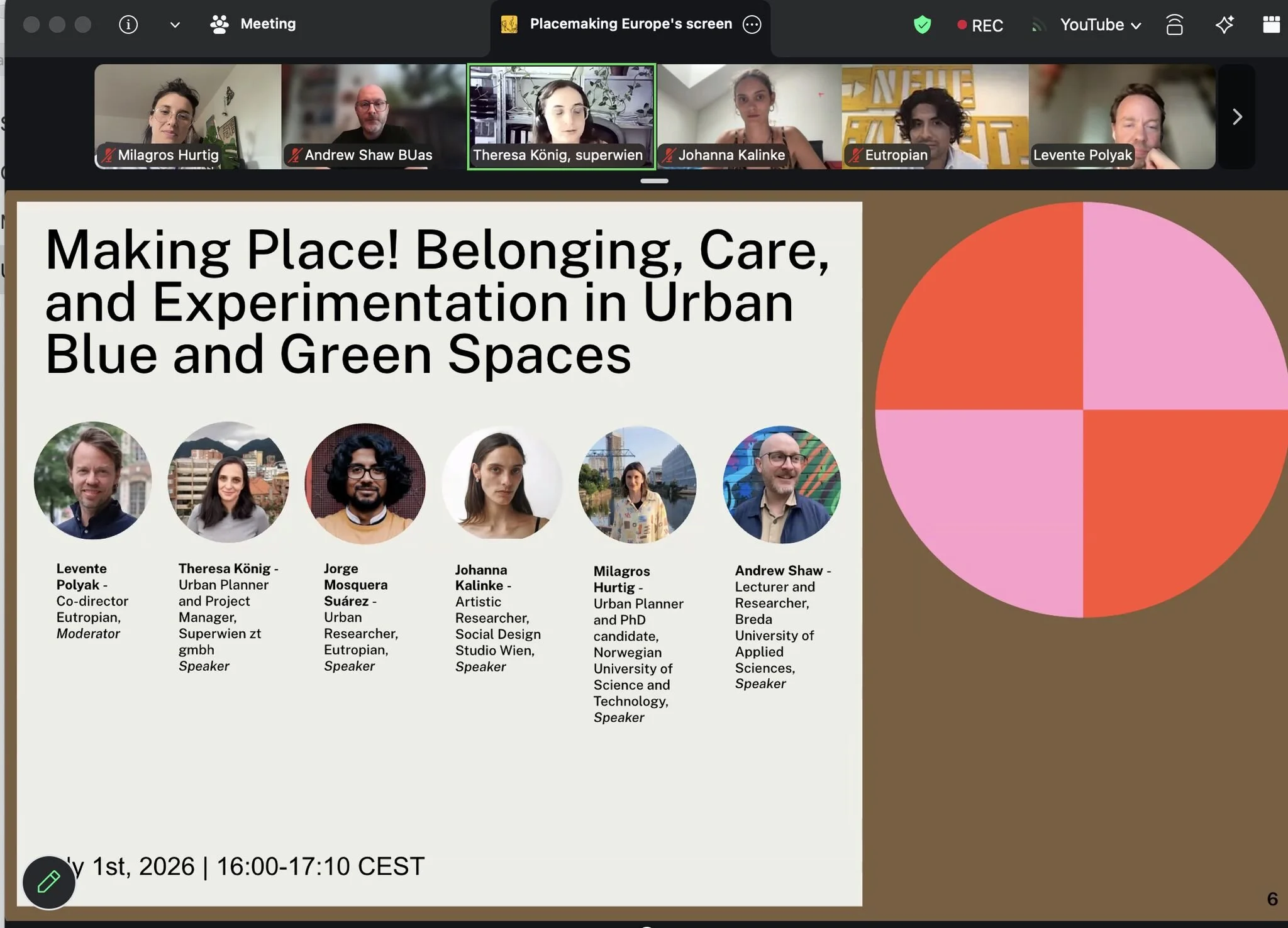
I was invited to join InclusiveCity colleagues from Vienna and beyond for the first session of Making Place!, a two-part webinar series sharing early findings from the project's Urban Living Labs. This first session, moderated by Levente Polyak and Rosaria Battista, focused on the question: what does it take for a blue or green space to move from being merely used to being genuinely cared for?
Under construction
I spoke about Rijnhaven, the former harbour basin at the heart of Rotterdam's InclusiveCity work. It's an unusual site to talk about belonging, because right now it barely has any long-term residents. The basin is being partially filled in, floating parks are being added, and the area sits between an industrial past and a mixed-use future. So instead of asking who already lives there, our work has had to focus on who is passing through today and who might feel ownership of the space tomorrow.
One thing already doing that work is a swimming platform on the water. On a summer afternoon it's packed, and packed with a genuinely mixed crowd. Local kids in particular have latched onto it as their place. It's also become somewhat divisive, largely because the people using the platform tend to come from the economically less advantaged neighbourhoods surrounding Rijnhaven, while some of the new development nearby tends to house those with a little more economic power. That tension is real, but I'd argue it's more of a headline than the whole story.
The institutions already doing the connecting
A theme I kept returning to was the role of cultural institutions that were placed in Rijnhaven for very top-down reasons, but which are increasingly taking their social role seriously. Nieuwe Luxor Theatre runs Café Dox, where a weekly open evening called The LAB offers free art materials, an open stage, and space for local people to experiment, no purchase required. The Fenix Museum's indoor public square (Plein) functions almost as an all-weather living room. Individually these look like top-down interventions; together, they've formed an informal network that already understands the neighbourhood, and programmes activities accordingly
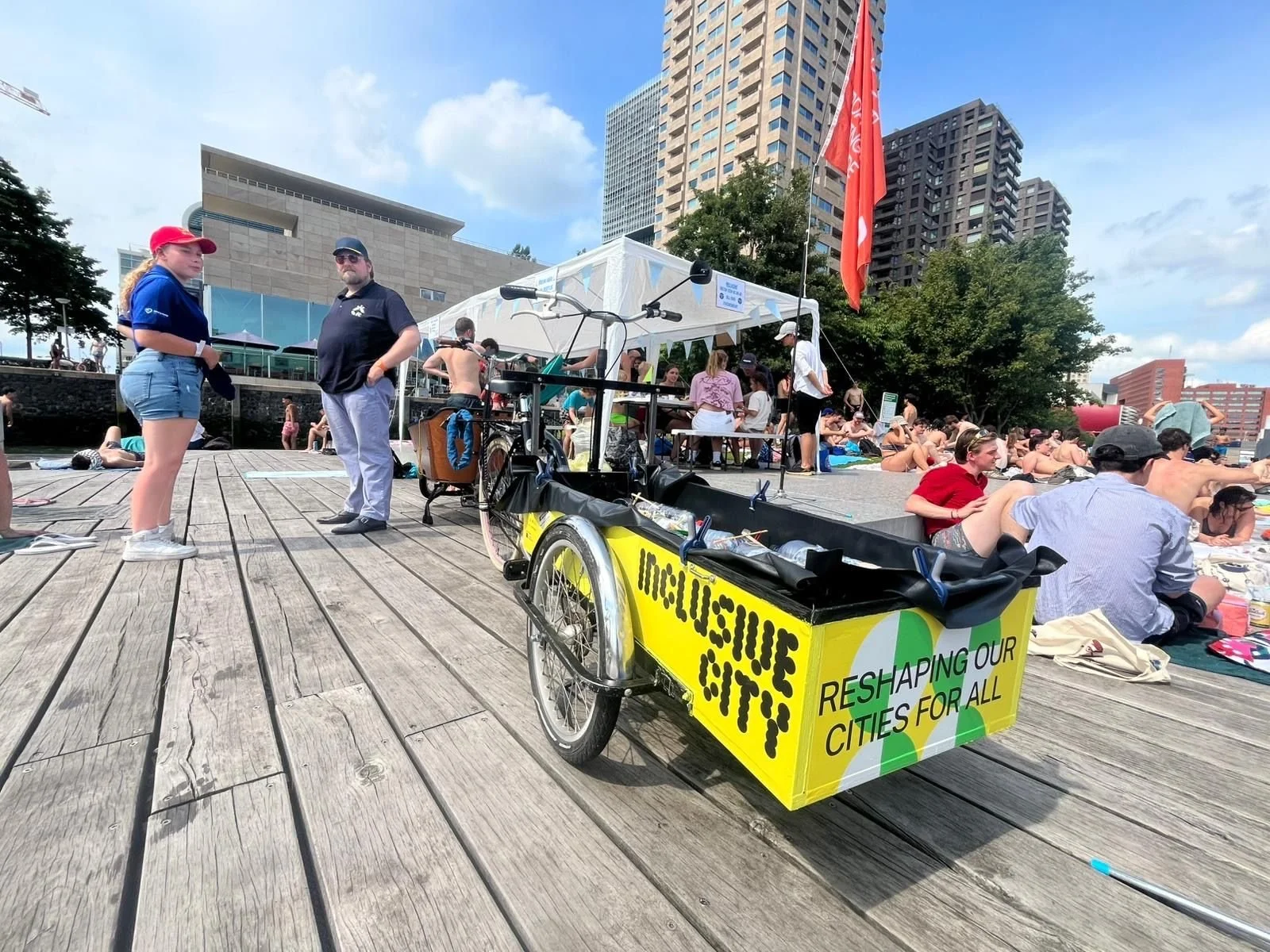
The swimming platform during an InclusiveCity event
Trust before data
Perhaps the point I care most about is how we approached the research itself. South Rotterdam has been studied repeatedly, and that history has left real fatigue and scepticism behind. People are understandably tired of giving up their stories to outsiders who then disappear. Our response has been to lead with trust rather than extraction: building a relationship with Café Dox first, designing activities that give participants something back, such as a skill, an experience, or simply a fun afternoon, rather than treating every interaction as a data-collection exercise, and being honest that a workshop won't necessarily change a masterplan, even if it's genuinely useful and enjoyable in its own right.
Designing for change, not permanence
I also talked about the Containertrap (container steps) outside Café Dox, a temporary structure whose ground-floor use rotates deliberately: a library one season, a hairdresser's the next, a podcast studio after that. It's built to keep changing, which mirrors how I think placemaking in a site like Rijnhaven has to work. Some interventions will stick; plenty won't, and that's fine. There needs to be a flexibility in planning and designing spaces, which I think is the hardest thing to achieve in urban design.
