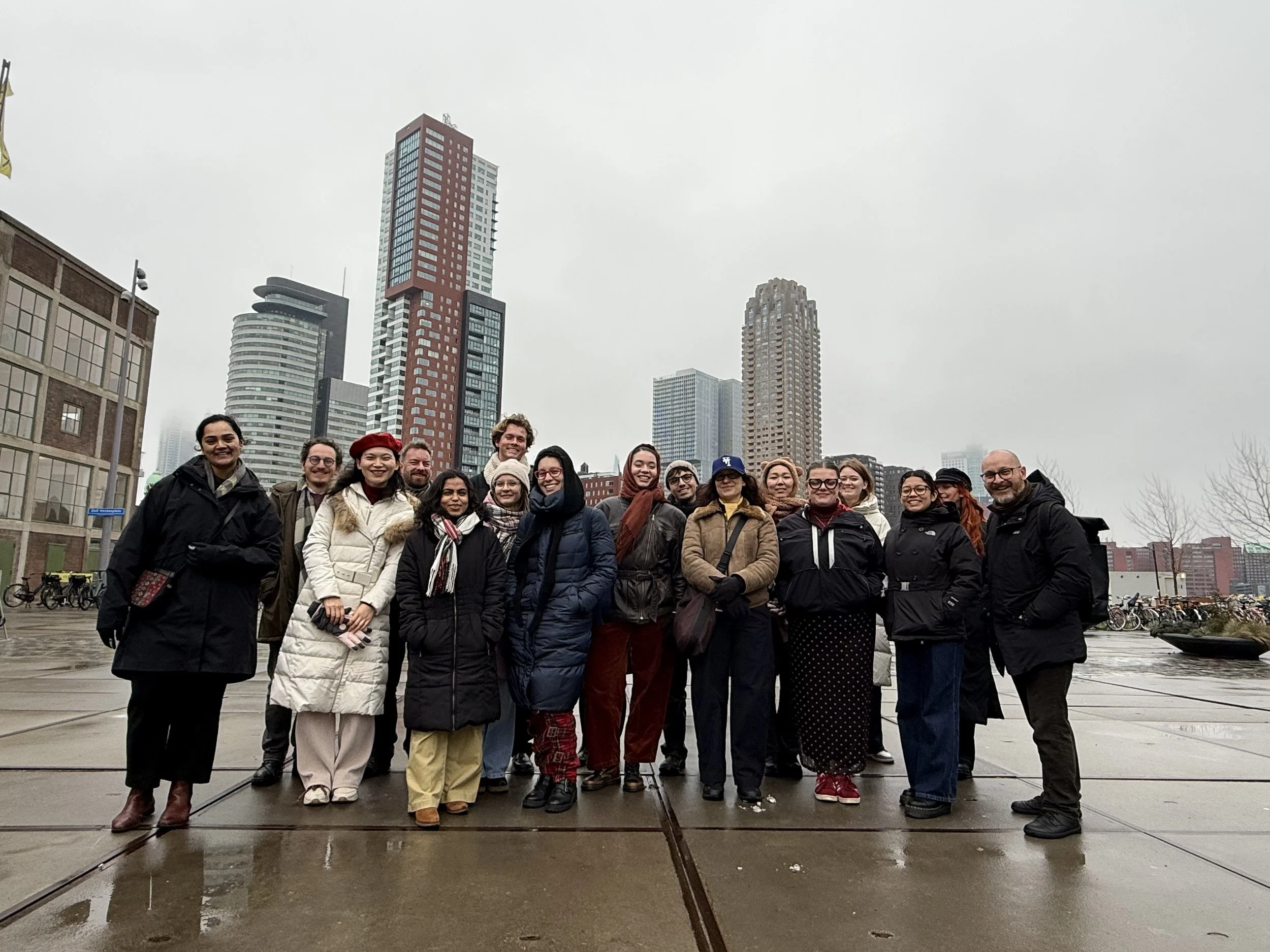
Urban Culture and Tourism workshops, Erasmus University, Rotterdam
Over the autumn and winter, I was twice invited by Apoorva Nanjangud to give guest lectures to postgraduate students at Erasmus University Rotterdam. The two sessions were different in format and focus, but both centred on the same theme of urban culture.
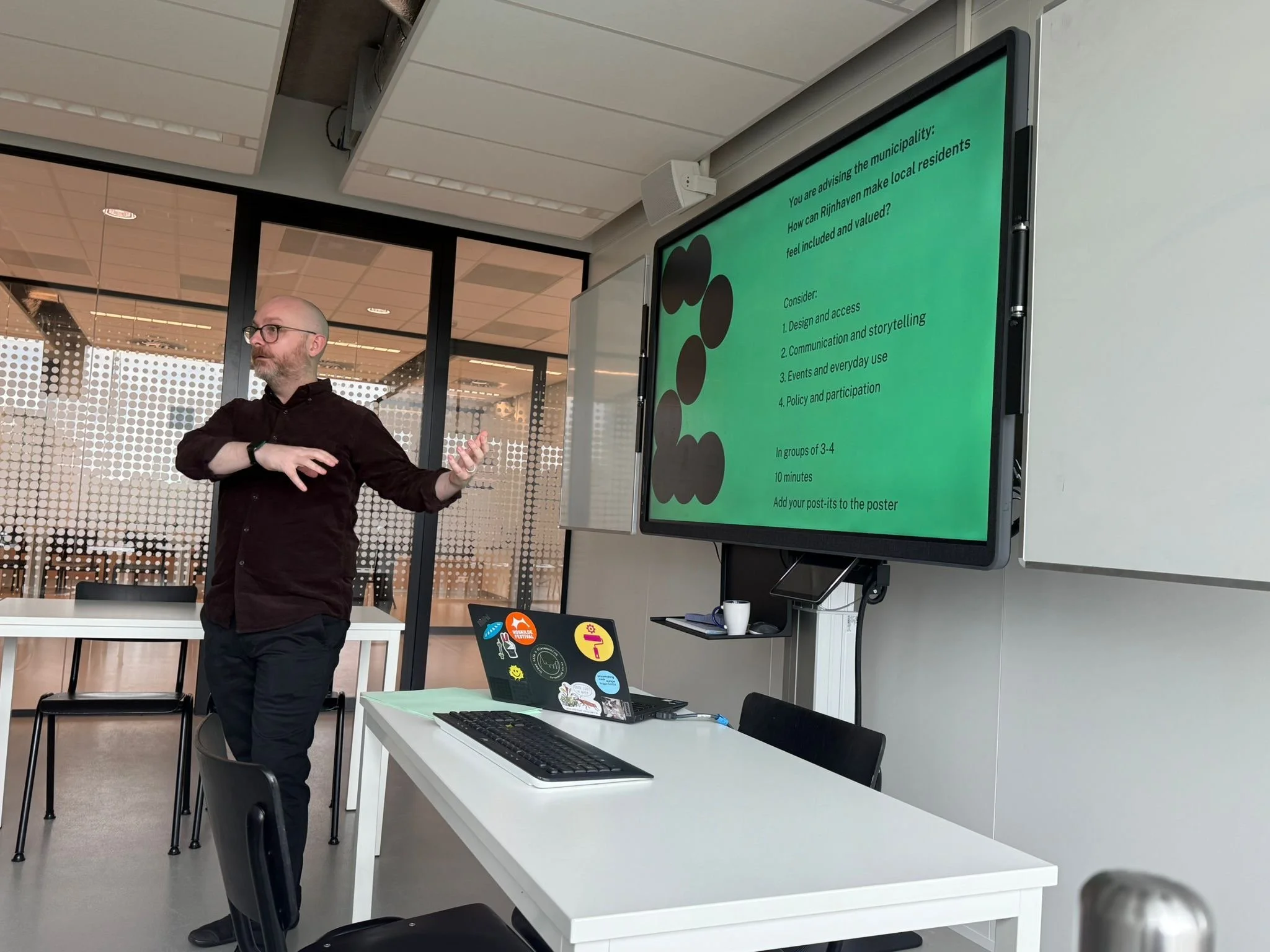
Discussing approaches to inclusive consultation
The first visit, in October 2025, was a guest lecture to students on the Master of Tourism, Culture & Society. I was asked to discuss sustainable cultural tourism, and I used the opportunity to focus on Rijnhaven, the historic harbour area on Rotterdam's south bank that is currently being redeveloped, and where I am doing research as part of the InclusiveCity project.
The harbour opened in 1895 and declined after containerisation shifted port activity further out to sea. It's now being reimagined as part of Rotterdam’s 'City Lounge' strategy, a vision that aims to blend housing, culture, tourism and innovation along the waterfront, attracting visitors and investment, while creating a sustainable urban environment.
While the renders of the Rijnhaven development look exciting, there are tensions in the local area that should be considered.
The area sits adjacent to Katendrecht and Afrikaanderwijk, two neighbourhoods with strong community identities and relatively diverse, working. class populations. The question the InclusiveCity project keeps returning to is simple but difficult: when a neighbourhood becomes a destination, who benefits? Rising property prices, cultural spaces that orient themselves towards visitors, limited local input in planning decisions; these are the gaps between the 'inclusive' branding and the everyday experience of people who actually live there.
This is the tension I brought to the students, not as a problem with a tidy solution, but as a live conflict worth thinking through carefully. We used Lefebvre's 'Right to the City', and Arnstein's Ladder of Public Participation to look at the different degrees to which communities can be involved in decisions that affect them. The discussion was good, and the students brought perspectives from their own contexts that pushed it into interesting places. We also talked about the ethics of research itself and the risk of extractive methods that treat communities as data sources rather than as co-producers of knowledge.
The January session was a different format entirely. The students this time were from the MAGMa programme (Managing Art & Cultural Heritage in Global Markets), and the day was structured around a guided tour of Rotterdam Zuid. We walked through Afrikaanderwijk and Katendrecht before heading to the Rijnhaven waterfront, using physical spaces to anchor the discussion.
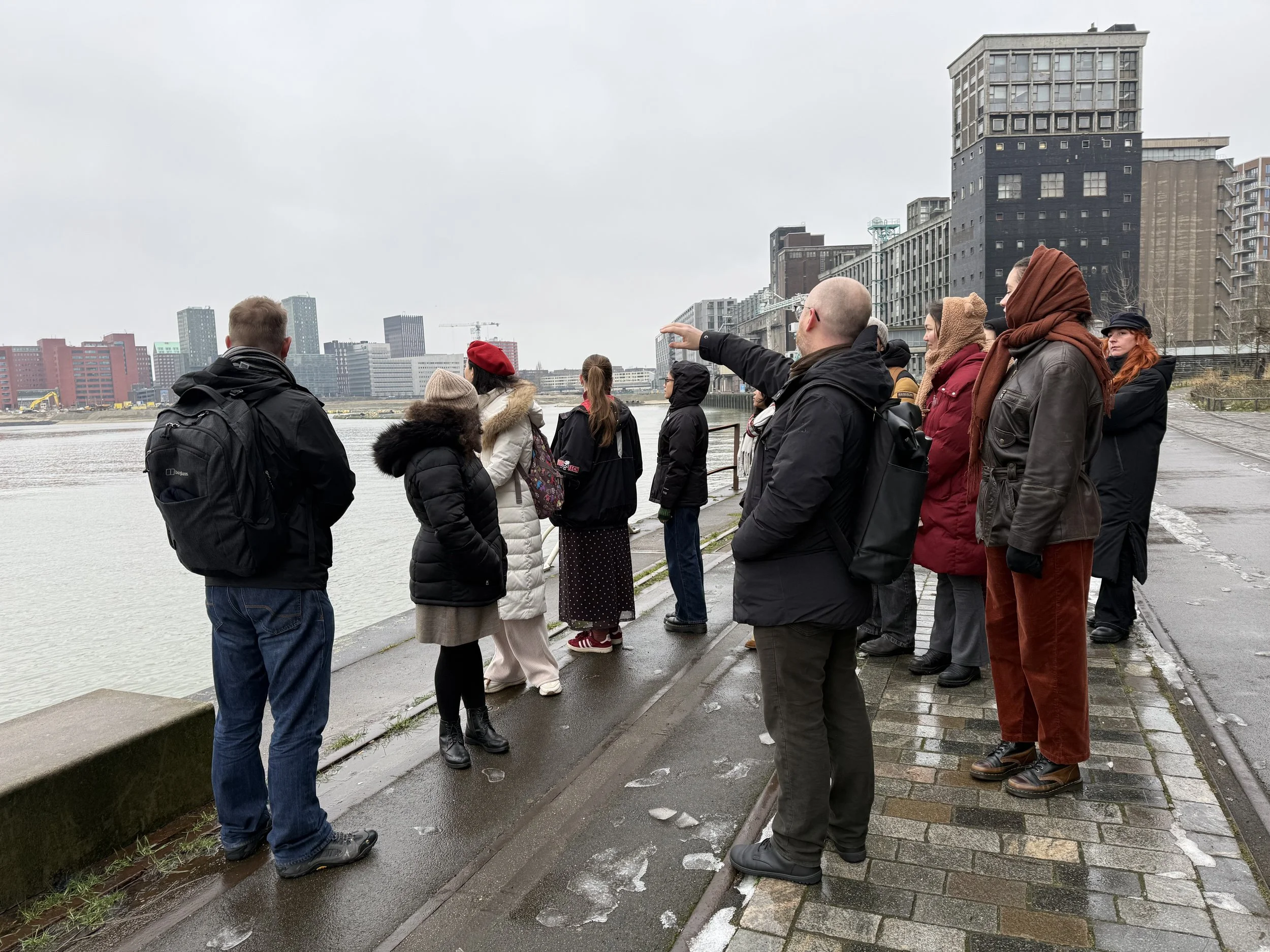
Th future under construction
Standing in Afrikaanderwijk, the street-level market life, community centres, and observing the visible contrast between the existing neighbourhood and the gleaming new development creeping towards it, makes the tensions feel a lot more concrete.
The MAGMa group's international backgrounds led to a particularly wide-ranging conversation, and students brought comparisons from their own countries and professional experiences that added input I wouldn't have arrived at on my own. That's one of the things I genuinely enjoy about these sessions: the knowledge flow is not one-directional. I came away having learned things I didn't know when I walked in.
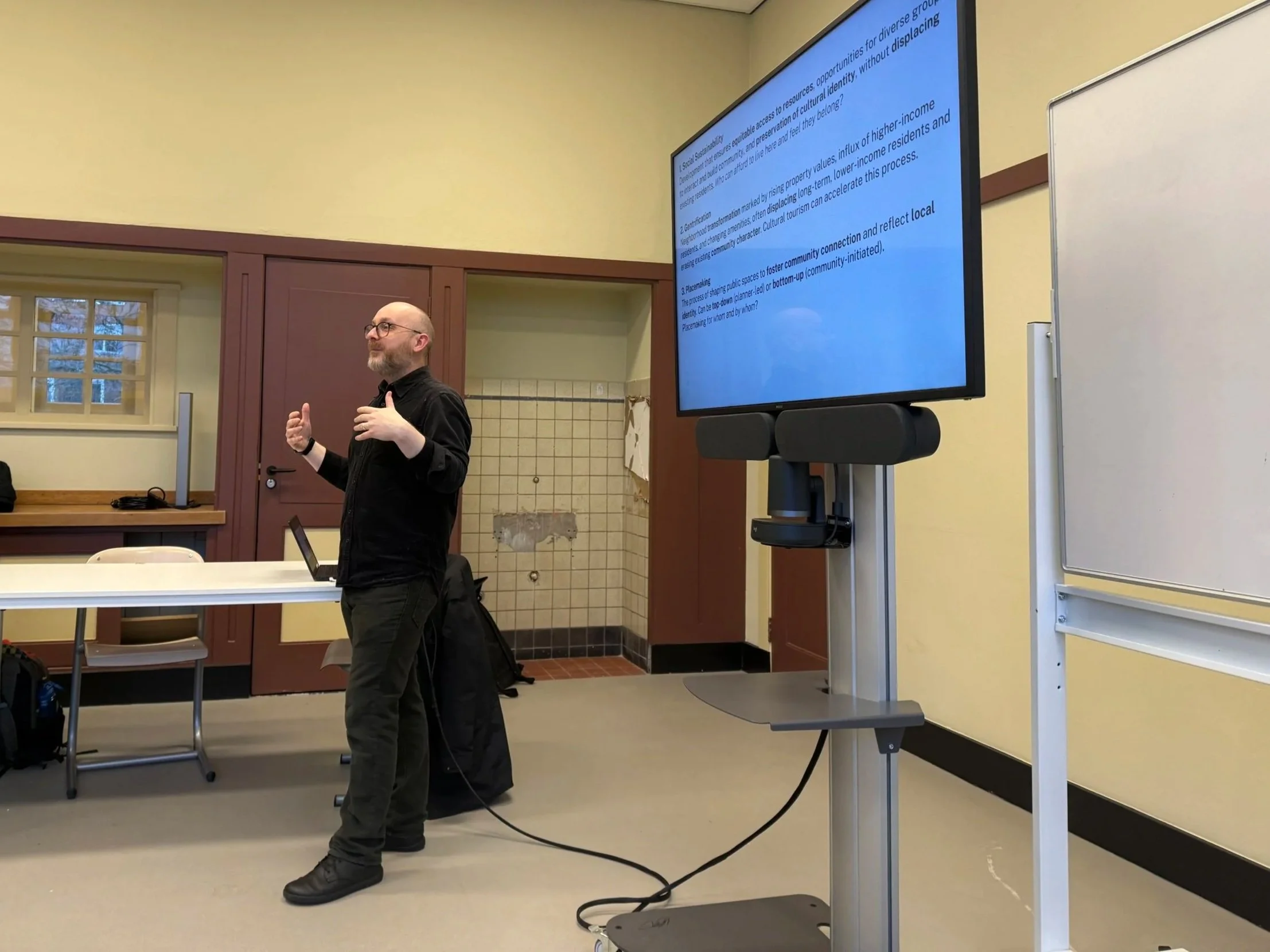
A discussion after the tour on some of the main themes
Both visits reinforced something I keep returning to in this research: the concept of social sustainability is easy to name, and hard to operationalise. Equity and access, social cohesion, cultural identity, sense of belonging, these are not simply things to check off a list. They require ongoing negotiation between stakeholders, whose interests often diverge, and they require forms of participation that go well beyond consultation. The question is not just whether local communities are invited to the table, but whether the table is being set in a way that makes their contributions meaningful.
The Rijnhaven development is still unfolding. The 2030 vision is ambitious, and there are genuinely exciting things happening in the area. But the risk is that 'sustainable' becomes a word that describes the architecture and the energy systems, while the social fabric quietly fizzles away. That's what the InclusiveCity research is trying to track, and it's why conversations with students, with their fresh eyes and genuine critical edge, are a useful part of the process.
Thanks to Apoorva for both invitations, and to the students for the quality of the discussions.