
Vintage Book Review: Pride of Place - The Civic Trust - 1974
When in the UK, I always try to have a quick look around the second hand book shops. This is especially the case in the university cities, where academic and non-fiction books are easily picked up for a couple of pounds.
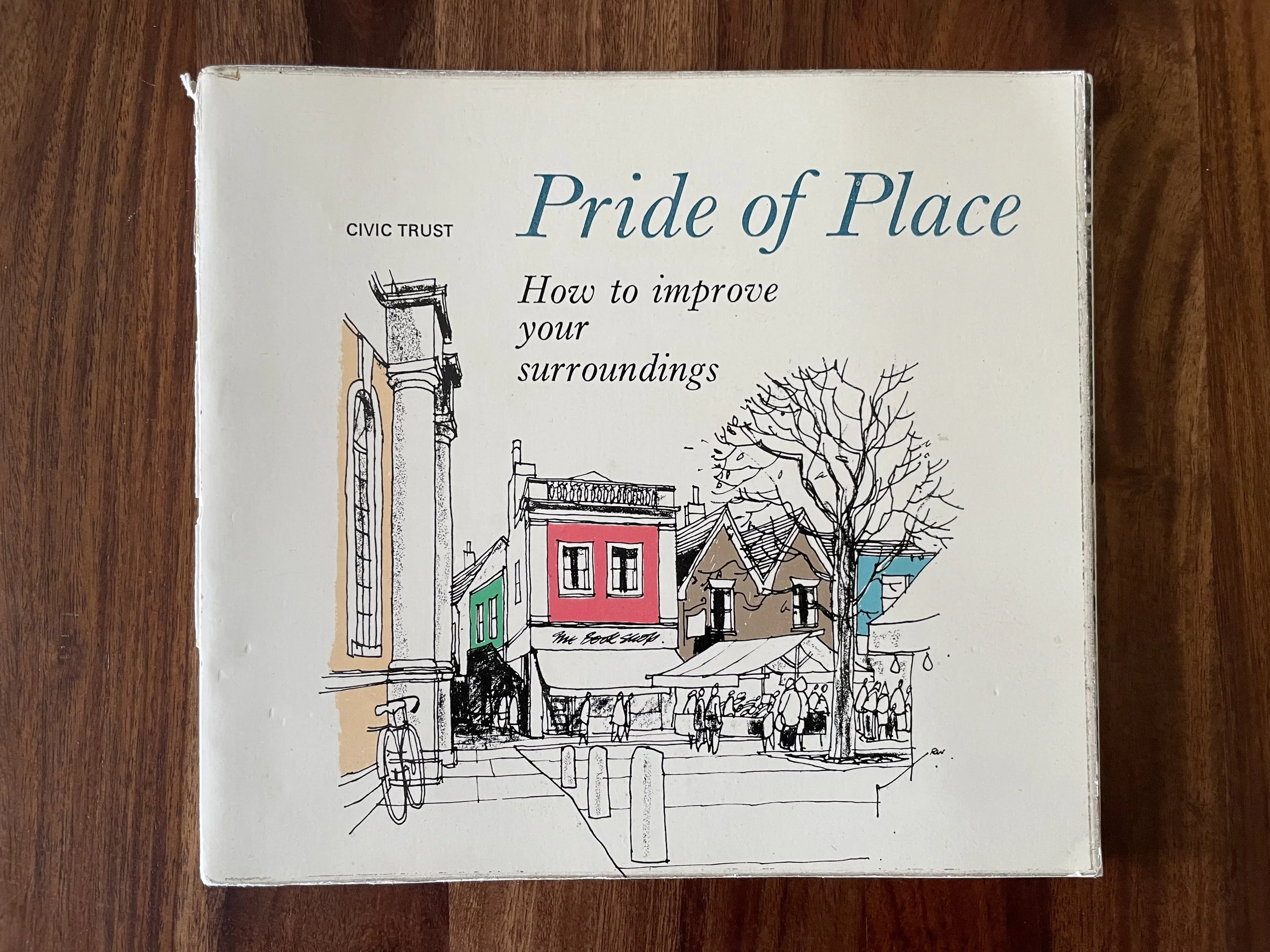
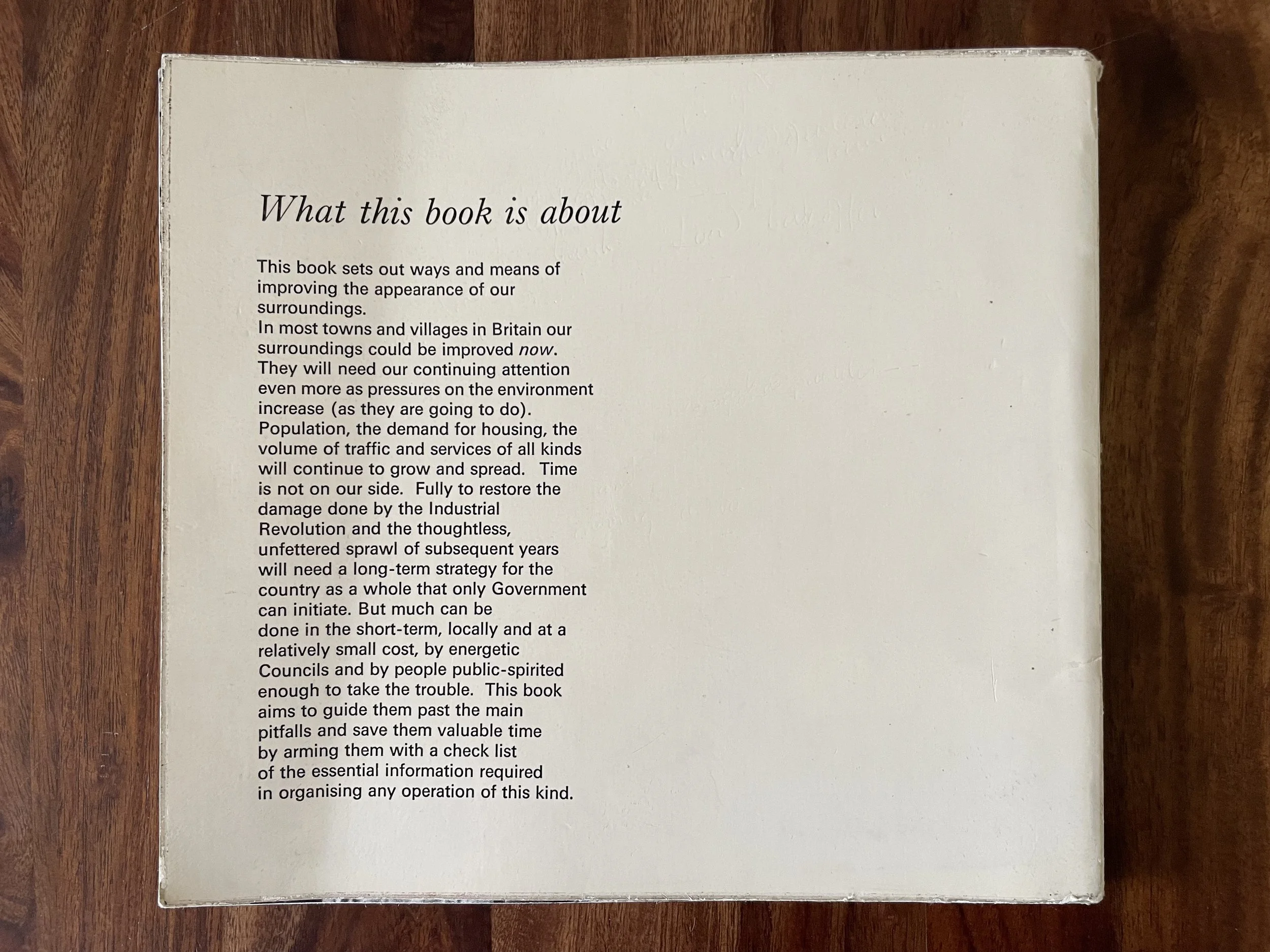
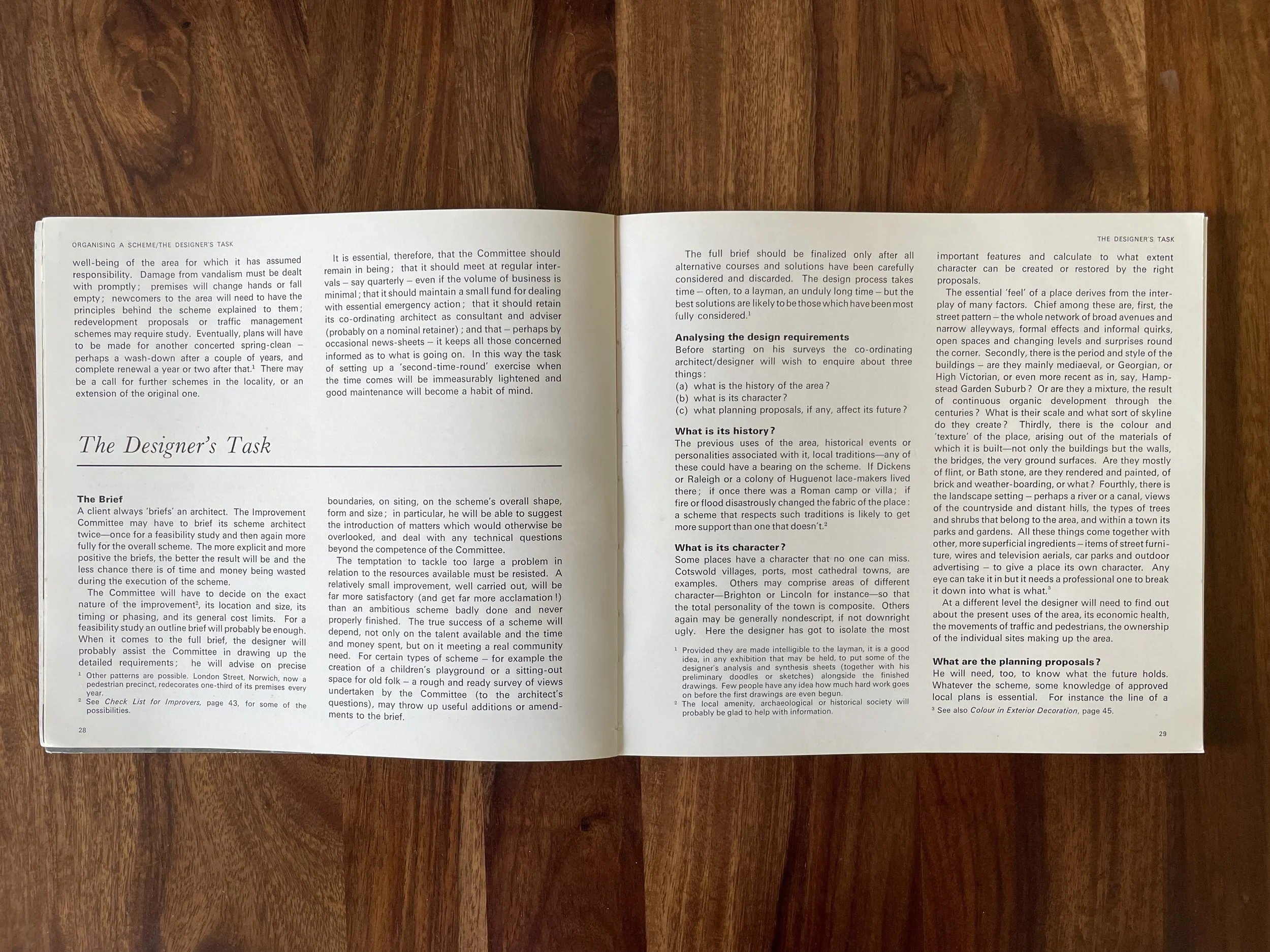
This book caught my eye. Firstly, the name; ‘Pride of Place: How to improve your surroundings’. This called out to my interest in placemaking, but also the authoritative air with which the book suggests it has all the answers. This is reminiscent of the British public information films that I grew up with.
On opening the book, I enjoyed the simplicity of the language employed, and quickly realised that this book was meant as what we would today call a toolkit. I had essentially found a 1970s community placemaking guidebook.
The book guides the reader through good and bad urbanism, how to get improvement ideas off the ground and how to maintain the changes. It doesn’t take the tactical urbanism or temporal placemaking approach, but rather a longer-form method, based on community engagement and lobbying local authorities.
A section I particularly liked was an appendix of the relevant planning and other laws that users of this guide should be aware of. This is an aspect of specificity that I think is overlooked in modern toolkits. It would prove useful today, though would require a very context-specific approach. Somehow, this book manages to walk the line between a specific case report for a local authority, and a do-it-yourself guide for local placemakers.
The book demonstrates methods for highlighting and communicating issues, such as with annotated photos, and even includes sample letters that “people public-spirited enough to take the trouble” could use to drum up support
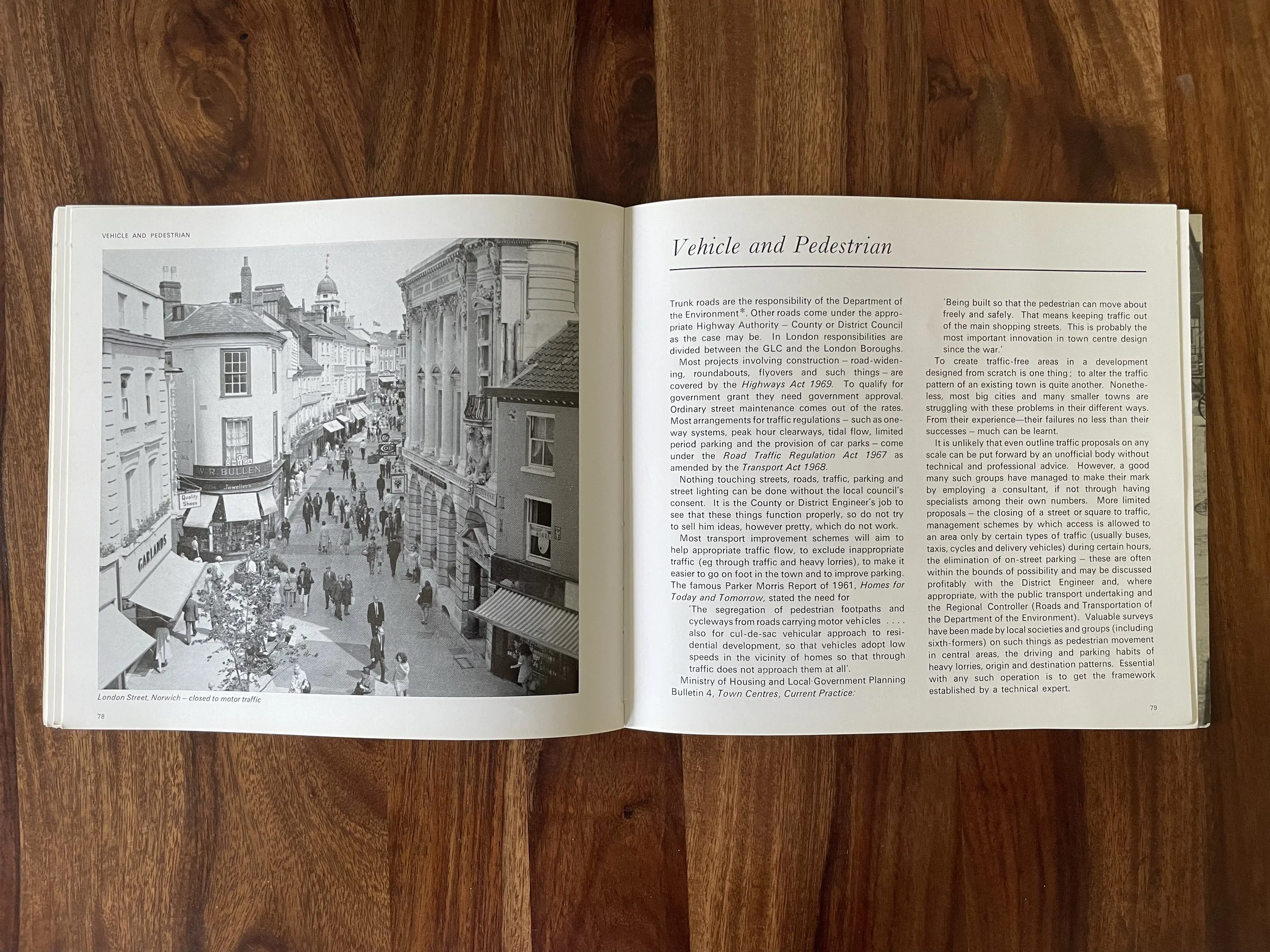
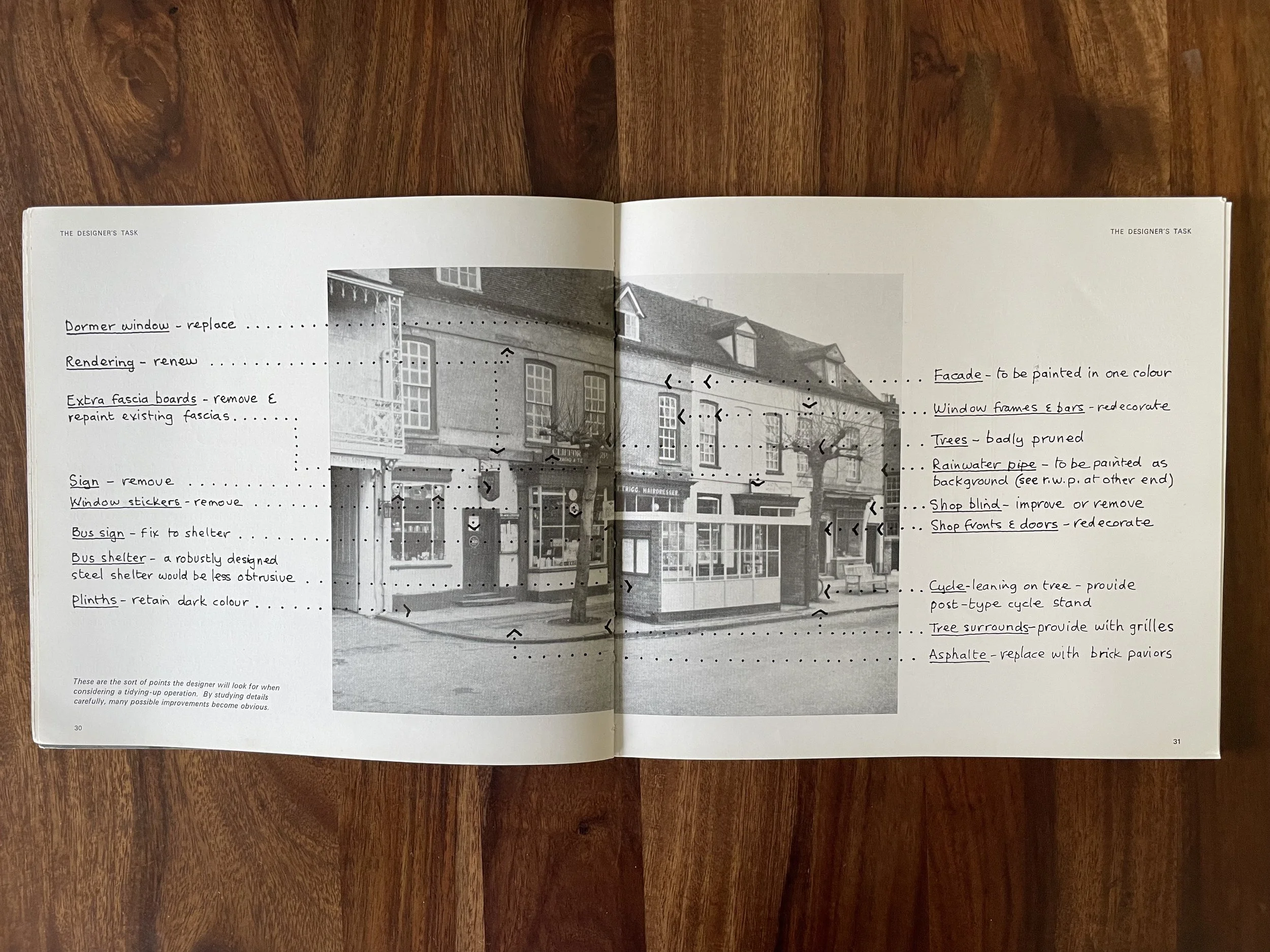
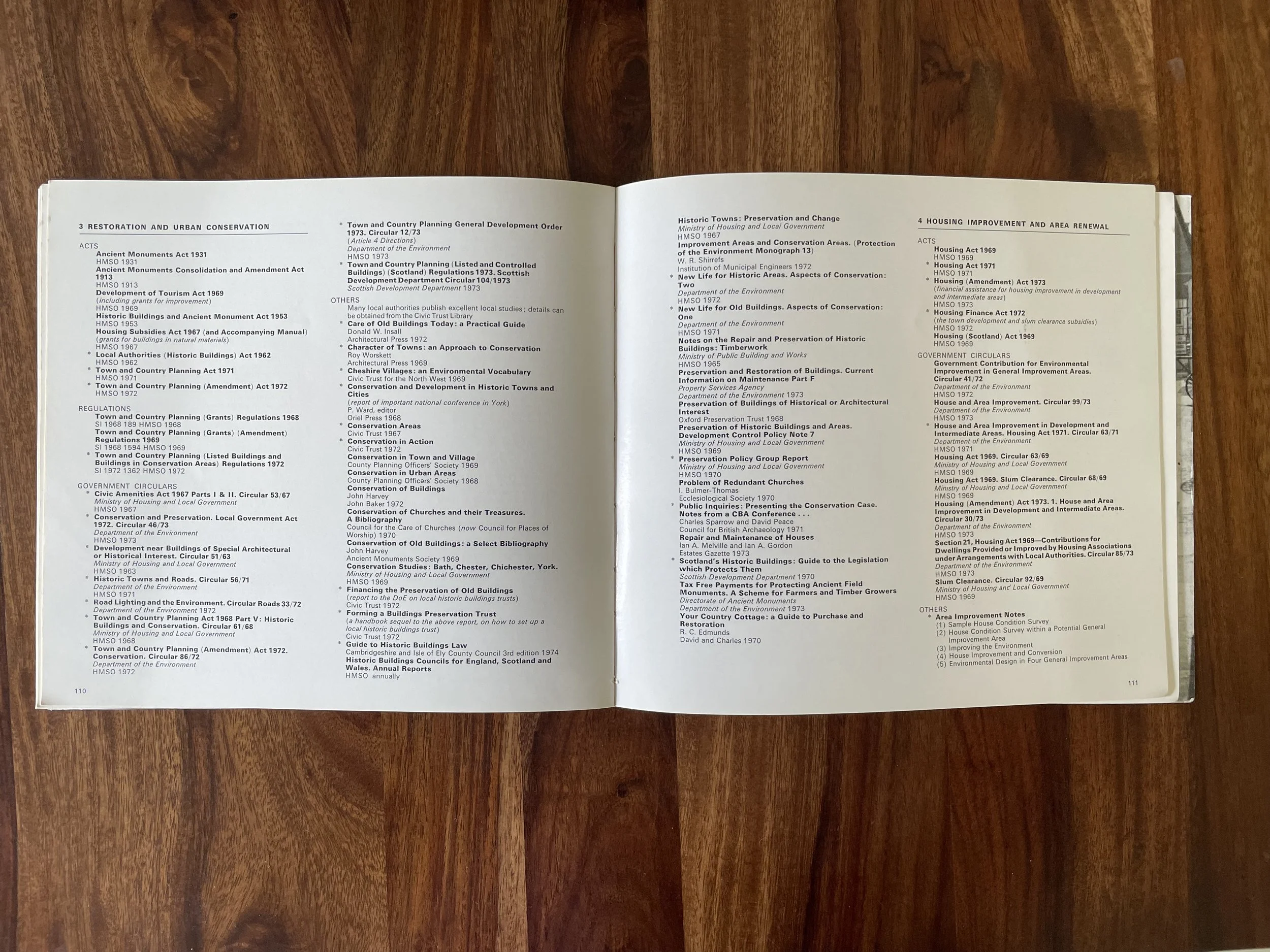
A main take-away I have from this book is how little things have changed. As I mentioned, the message of this book feels very little different from a toolkit that could have been released last week, albeit with somewhat out-moded English. Certainly, the sections on greening, or use of traditional materials are completely in line with modern rhetoric around pedestrian and cycle-centred street design.
Something I would push back on a little is the tone. I think this is partly in my own head, but when reading this book, I couldn’t help but hear an old-fashioned BBC-English voice, with a top-down morality and sense of right and wrong.
I do wonder if this advice would still hold up in a modern UK, with a multi-cultural and multi-ethnic society. It does feel like some of the concepts of ‘good’ design seem to come from one point of view.
I love books like this, because they show how some ideas are timeless. These ideas should be held onto and incorporated as much as possible. If they were seen to be progressive 50 years ago, and still are today, there must be something about them that can be held as universally true.
If you manage to find books like this, I highly recommend getting them. Maybe something old will teach you something new
About the author
The Civic Trust was an independent charity founded in 1957 by Duncan Sandys to encourage the improvement and protection of Britain's built environment. It worked with the growing network of local civic societies and amenity groups, offering advice and a national voice on planning and conservation matters.
The Trust campaigned for the preservation of historic buildings and townscapes, and its efforts contributed to the Civic Amenities Act 1967, which introduced conservation areas into British planning law. It was also known for its annual Awards Scheme, recognising good new building and restoration work, and for practical improvement schemes carried out with local authorities across the country.
